/7wjofq6zywinvayhzzq86goeaq2e)
/di6hy0c9t9fwyi7ckswn1pgi7dds)
Content
If you've ever wondered, "What do political campaign volunteers do?” - you're not alone. Most people picture knocking on doors or stuffing envelopes. And yes, canvassing is a big part of it. But modern campaigns run on dozens of volunteer roles, many of which you can do from your couch in your pajamas.
Here's what most people don't realize: campaign volunteering isn't just about checking a box or putting in hours. It's about growth. In Mamdani's 2025 New York City mayoral campaign, over 100,000 volunteers were mobilized, and hundreds stepped into formal leadership roles - people who started by showing up for a single shift and ended up running entire field operations.
That's the real story of what campaign volunteers do. They don't just help campaigns win. They become organizers, leaders, and community builders in the process.
But it starts with something simpler than most people realize. A campaign builds momentum - through its message, its candidate, its grassroots energy. That momentum reaches people. They feel something. They search for the signup page. And the moment they enter their name and phone number, they've crossed a threshold. The best campaigns understand that their job isn't just to fill volunteer slots. It's about creating the kind of momentum that drives people to sign up in the first place, and then channeling that energy into something lasting.
Let's break down every role, what it actually looks like day-to-day, and how volunteers move up.
What Do Campaign Volunteers Actually Do?
The short answer? Almost everything. Campaigns are massive logistical operations that run almost entirely on volunteer power. A presidential campaign might coordinate over 100,000 volunteers across multiple states. A local city council race might rely on 30 dedicated people doing a little bit of everything.
The roles fall into a few big categories:
Voter contact - Canvassing, phone banking, and texting to reach voters directly
Operations and data - Managing voter files, tracking results, keeping the machine running
Events and outreach - Setting up rallies, hosting canvass launches, running registration drives
Fundraising - Calling donors, organizing house parties, managing online campaigns
Digital - Social media, content creation, online mobilization
Most volunteers don't stay in one lane. They start where they're comfortable and grow from there. That progression is one of the most powerful parts of campaign volunteering.
Core Campaign Volunteer Roles
Door-to-Door Canvassing
Canvassing is the most iconic form of campaign volunteering, and it's iconic for a reason: it works. Research from Yale's Institution for Social and Policy Studies has consistently shown that face-to-face canvassing is the single most effective way to persuade voters and increase turnout.
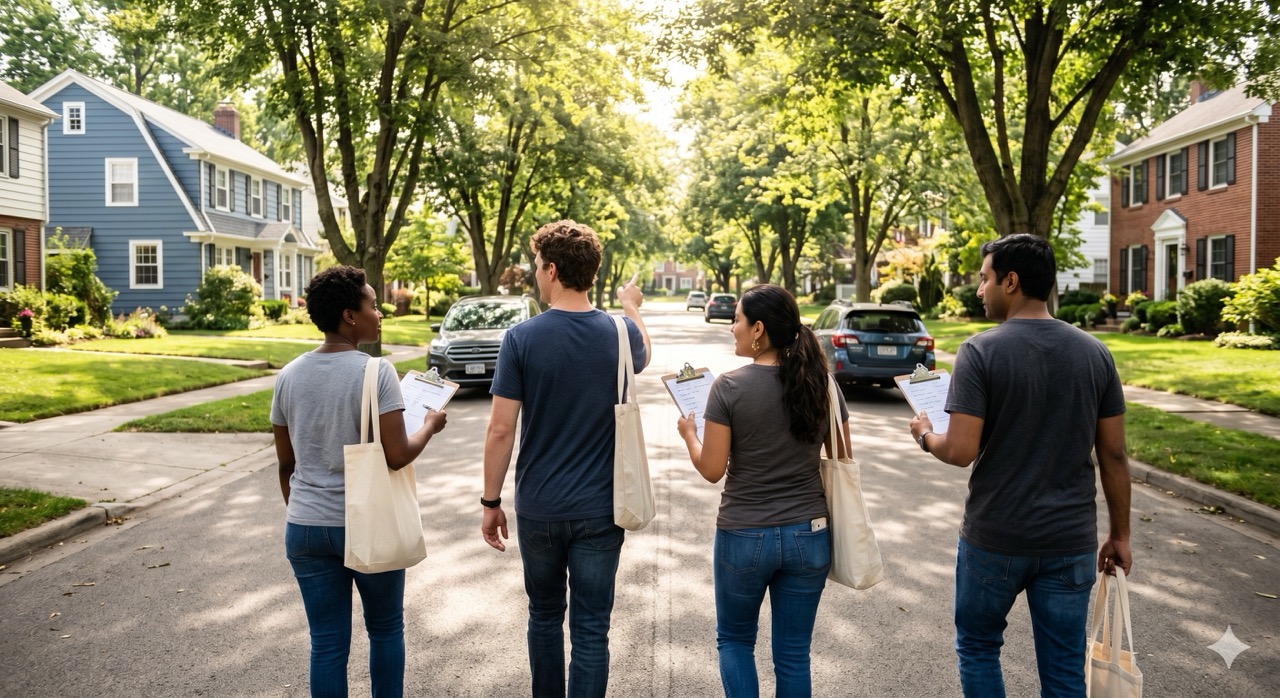
Here's what a canvass shift actually looks like. You show up at a staging location - someone's apartment, a community center, a campaign office. You get a brief training on the script and the turf you'll be walking. You're paired with a partner (especially if it's your first time), handed a walk list, and sent out for a two- to three-hour shift.
At each door, you introduce yourself, share why you're there, ask a few questions, and listen. That's the key part - listening. You're not there to lecture anyone. You're there to have a conversation and record what you learn.
The impact is real and measurable. During Mamdani's 2025 New York City mayoral campaign, volunteer canvassers knocked on over 3 million doors through direct conversations at the door. Every knock is an act of bravery - both for the volunteer who knocked and the voter who answered.
Phone Banking
Phonebanking is the workhorse of voter contact. It lets campaigns reach thousands of voters in a single evening, and volunteers can do it from anywhere with a phone or computer.
Most campaigns use auto-dialers or predictive dialers that connect volunteers to voters automatically. You see the voter's name on your screen, follow a script, and log the result after each call. A typical phone bank shift runs about two hours, and an experienced volunteer can make 100+ calls in that time.
The phone banking script isn't meant to be read robotically. Good phone bankers treat it as a conversation guide - they hit the key points but let the dialogue flow naturally.
In the Mamdani campaign, phone bankers made over 4.5 million calls to voters. When you think about the sheer volume of calls a phone bank can produce in a night, the numbers make sense.
Phone banking is also one of the most accessible volunteer roles. You don't need to walk for hours in the heat. You don't need to be in the district. You just need a quiet space and a willingness to talk to strangers.
Peer-to-Peer (P2P) Texting
P2P texting has exploded in the last decade; volunteers send personalized text messages to voters from a platform that lets them manage hundreds of conversations at once. Unlike robotic mass texts, P2P texting requires a real person to initiate and respond to each message. That human element keeps conversations authentic and campaigns legally compliant.
Texting is perfect for volunteers who want to help but can't commit to a fixed time slot. You can send texts during your lunch break, while waiting for an appointment, or late at night.
Data Entry and Voter File Management
This is the role that doesn't get enough credit. Behind every successful canvass, phone bank, and text campaign is a voter file - a massive database of voter information that tells the campaign who to contact, what to say, and when to say it.
Data volunteers keep that file accurate and up-to-date. They enter results from canvass shifts, clean up duplicate records, update contact information, and flag voters who've moved or become unreachable.
It's not glamorous. But it's the backbone of every strategic decision the campaign makes. Without clean data, canvassers walk to doors that don't exist and phone bankers call wrong numbers.
Event Support and Organizing
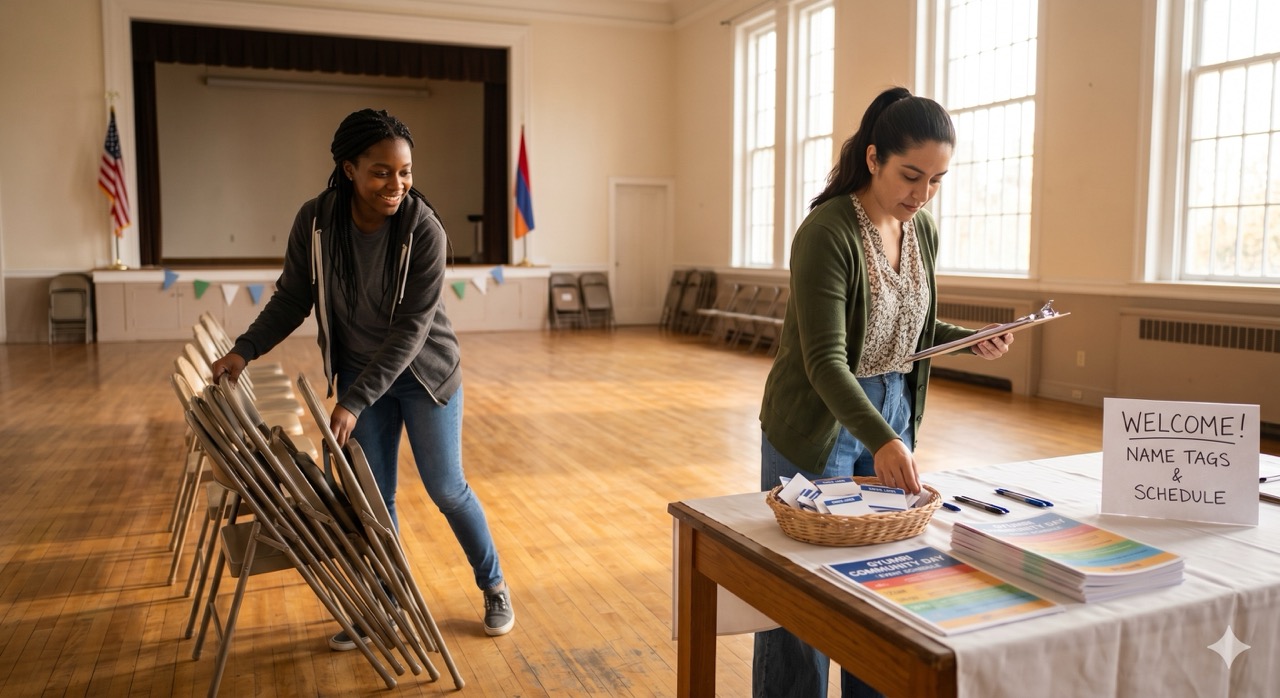
Campaigns don't just contact voters individually - they also bring people together. Rallies, town halls, canvass launches, house parties, and debate watch parties all require volunteer support.
Events volunteers handle everything from setting up chairs to managing check-in lines, directing attendees, and breaking everything down afterward.
But the most important event role is often the simplest: greeter. The person who meets someone at the door, makes them feel welcome, and helps them understand what's happening. First impressions matter enormously when someone shows up to their first campaign event.
Canvass launch events deserve special mention. Someone needs to set up the space, organize the walk packets, print the scripts, prep the snacks, and make sure every volunteer feels ready. These launch hosts are often some of the most experienced volunteers on the campaign.

Fundraising and Donor Outreach
Money fuels campaigns, and volunteers play a significant role in raising it.
Volunteer fundraising takes many forms: calls to potential donors, house parties where personal networks meet the candidate, and peer-to-peer fundraising campaigns online with personalized donation links shared through social media and email.
According to OpenSecrets, small-dollar donations - those under $200 - made up 42% of the Harris presidential campaign's fundraising in the 2024 election cycle, totaling $428.7 million driven largely by grassroots volunteer networks.
Voter Registration Drives
In many states, unregistered voters represent one of the largest untapped pools of potential support. Voter registration drives go out and meet these potential voters where they are - at community events, college campuses, grocery stores, transit stations, and houses of worship.
Volunteers set up tables, approach people, help them fill out registration forms, and submit the paperwork. This work often happens months before Election Day but pays off when those newly registered voters show up to cast their ballots.
Social Media and Digital Volunteering
Not every volunteer role involves talking to voters directly. Digital volunteers help campaigns amplify their message online - creating graphics, writing social media posts, filming short videos, managing comment sections, and sharing campaign content across personal networks.
Digital volunteering is especially popular with younger volunteers and those with physical limitations that make door-to-door work difficult. It's also one of the easiest ways to contribute small amounts of time.
The Volunteer Development Ladder
So what do political campaign volunteers do beyond the day-to-day tasks? The best campaigns don't just recruit volunteers - they develop them.
Think of it as a ladder. You show up for your first shift at the bottom, and the campaign gives you opportunities to climb as high as you want to go. Tools like leadership development software help campaigns track where each volunteer is on this path.
First-Time Volunteer
Everyone starts here. You sign up, show up, and do whatever the campaign asks. A good campaign will pair you with an experienced volunteer, give you clear instructions, and check in with you after your shift.
Trained Lead
After a few shifts, some volunteers are ready for more responsibility. Trained leads run phone bank rooms, manage canvass turfs, or handle data entry for the team. At this stage, you're starting to understand why the work matters and how it fits into the larger strategy.
Field Lead
Field leads are the operational backbone of a campaign's volunteer program. They recruit, train, and manage teams of volunteers - sometimes 20-30 people - running weekly canvass launches and phone banks, tracking performance, and reporting results. This is real leadership experience that translates directly to careers in organizing, politics, or nonprofit management.
Staging Host
At the top of the volunteer ladder, staging hosts run mini-campaigns within the larger operation. They open their homes or secure community spaces for canvass launches, manage logistics, recruit and develop their own volunteer teams, and serve as the campaign's point person for their neighborhood.
In the Mamdani campaign, hundreds of volunteers stepped into these kinds of leadership roles out of a mobilized base of over 100,000. People who started as first-timers and grew into organizers. That's not a footnote - that's the whole story.
What a Typical Volunteer Shift Looks Like
Let's walk through a Saturday-morning canvass shift, because knowing what to expect makes it easier to show up.
9:30 AM - Arrival and check-in. You show up at the staging location. Someone greets you and checks you in. New volunteers head to training; returners grab coffee.
9:45 AM - Training and script review. The field lead runs a 15-minute training covering the script, sample conversations, and the turf you'll be walking.
10:00 AM - Turf assignment and departure. You get your walk list and map. Most campaigns also use a mobile app that shows your route and lets you log responses in real time. You head out with your partner.
10:15 AM - 12:30 PM - Knocking doors. For the next two hours, you're walking your turf and having conversations. A typical canvasser can hit 40-60 doors in a shift.
12:30 PM - Debrief. You return, turn in materials, and debrief with the team. The field lead asks about memorable conversations and thanks everyone. This is where volunteers process the emotional weight of the work and feel recognized.
1:00 PM - Done. The whole thing took about three hours. You've talked to 15-25 voters and contributed directly to the campaign's voter contact goals.
How Much Time Do Volunteers Commit?
One of the biggest barriers to volunteering is the assumption that you need to give up every weekend. You don't.
Commitment Level | Time Per Week | Typical Activities |
|---|---|---|
Light | 1-2 hours | P2P texting, social media sharing, occasional phone banking from home |
Moderate | 3-5 hours | Weekly canvass shift or phone bank, plus some texting |
Heavy | 8-15 hours | Multiple shifts per week, data entry, event setup, team coordination |
Leadership | 15-25+ hours | Managing volunteer teams, hosting staging locations, strategic planning |
Most campaigns are genuinely grateful for whatever time you can give. One two-hour phone bank shift per week adds up to thousands of voter contacts over the course of a campaign.
The Real Impact of Campaign Volunteering (By the Numbers)
When people ask what political campaign volunteers do, numbers help tell the story. Mamdani's 2025 New York City mayoral campaign offers one of the clearest pictures of what a volunteer-powered operation can achieve:
100,000+ total volunteers mobilized to support the campaign
4.5 million phone calls made by volunteer phone bankers
3 million doors knocked by volunteer canvassers. Hundreds of volunteers grew into formal leadership roles
What those numbers represent isn’t just voter contact. It’s distributed civic infrastructure: thousands of neighbors learning how to organize, coordinate, and lead. That kind of capacity doesn’t vanish on Election Day. It becomes the foundation for campaigns (and eventually for governments) to rely on.
When campaigns use tools like reporting dashboards to track these results, they're not just measuring efficiency. They're documenting the collective courage of thousands of people.
That's the full picture of what political campaign volunteers do. It's not just about outcomes - it's about what happens to you in the process. You build confidence, skills, and relationships that outlast any single election.
How Solidarity Tech Powers Every Volunteer Role
When you join a campaign, your role can vary a lot — canvassing, calling voters, helping at events, or supporting operations behind the scenes. The challenge for campaigns is keeping all of that work organized and connected.
Solidarity Tech is a political campaign platform that brings those roles into one system, so no matter what you’re doing, your work feeds into the same campaign effort. Every micro-tool we mention below, is a part of Solidarity Tech platform.
If you’re doing outreach, like calling or texting voters, you’re not working off separate tools or spreadsheets. You get a script, a list of contacts, and built-in tools to complete the task. Your conversations are logged automatically, so the campaign doesn’t lose that information and can act on it immediately.
If you’re canvassing, the process is just as structured. Instead of paper lists, you use a mobile field app with assigned routes, voter data, and scripts. As you knock doors and record responses, everything updates in real time. That means your work directly affects what the campaign does next.
For events, the same system handles sign-ups, attendance, and coordination. You’re not switching between tools or working from disconnected lists. Everything - who signed up, who showed up, and who’s helping - is already organized in one place.
And if you’re supporting behind the scenes, the benefit is visibility. You can see outreach activity, participation, and engagement without chasing data across platforms. That makes it easier to support organizers and keep things running smoothly.
Over time, as you stay involved, campaigns can see your activity and consistency. That’s how volunteers move into more responsibility, based on actual participation.
The point is simple: different roles, one system. Whatever you’re doing, your work is tracked, connected, and used.
Final Thoughts
Political campaign volunteers do far more than most people imagine, from knocking doors and making calls to managing data, organizing events, and stepping into leadership roles that shape entire field operations. The work is varied, accessible, and genuinely impactful.
Every task, no matter how small it seems, connects to a larger effort to reach voters and build community power. If you've been wondering whether your time would make a difference, the answer is clear: campaigns aren’t something done for communities. They’re built by the communities themselves. And when that organizing muscle exists, it doesn’t disappear; it shapes what happens long after the ballots are counted.
Frequently Asked Questions
Do I need experience to volunteer for a political campaign?
No. The vast majority of campaign volunteers have zero prior experience. Campaigns expect this and build training into every shift. You'll learn the script, get paired with someone experienced, and have support available the whole time. Show up willing to learn - that's all you need.
Can I volunteer remotely?
Yes. Phone banking, P2P texting, data entry, social media, and certain fundraising roles can all be done from home. Most campaigns now have robust remote programs. Some volunteers complete entire campaigns without ever visiting a physical office.
How old do you have to be to volunteer for a campaign?
There's no legal minimum age, though most campaigns set their own guidelines - typically 16 or older for canvassing and 13+ for phone banking or texting with parental consent. High school and college students make up a significant portion of campaign volunteers.
What if I'm introverted or nervous about talking to strangers?
You're in great company. Many of the best campaign volunteers describe themselves as introverted. Start with a role that feels comfortable - data entry, texting, or social media. If you try canvassing or phone banking later, you'll be surprised how quickly the nervousness fades with a script and a supportive team.
Can I volunteer for a campaign if I'm not a U.S. citizen?
Yes. Non-citizens can volunteer their time as long as they're not compensated. Per the Federal Election Commission, volunteering is considered a form of free expression, not a financial contribution. However, non-citizens cannot make monetary donations to campaigns.
How do campaigns keep track of all their volunteers?
Modern campaigns use campaign volunteer management software to manage sign-ups, schedule shifts, track hours, record voter contact results, and identify volunteers ready for leadership opportunities. This technology is what makes it possible to coordinate tens of thousands of people across a campaign.
read more
Explore More Volunteer-Powered Campaign Resources
From door-to-door canvassing to digital organizing, discover how candidates build movements one volunteer at a time.
/fdlpujb52uz1k6hm1nunt1tp9y5q)
What is Political Volunteer Management? Key Principles for Campaign Success
/uz0w87zd7pq2zs63pbovz5x7umtp)
How to Get Volunteers for Political Campaigns: Proven Strategies
/vki9394u62jq7rv84ocnuusvtsaq)
How to Volunteer for a Political Campaign and Make a Real Impact
/exzym3kozerwtqig9ibwyyf1vczm)
8 Political Campaign Volunteer Retention Strategies That Actually Work
/72ona3i30nypl3kfxrf77ucz0i4e)
How Youth Volunteering Can Uplift Your Election Campaigns
/0j1fcjzoz7aimar64ohmqwspzpeq)
How to Onboard New Political Campaign Volunteers
/y7gwlnub0zv25m2vg18rqfz0izhx)
How to Measure Political Campaign Volunteer Effectiveness
/0j6vjt9m08jy9u0kpn9o9zntlqe4)
7 Effective Strategies for Communicating with Political Volunteers