/2xcocpqn9w1gvw45uj6xah5j8t3a)
/5f2xxrrqir5o5imnpgt1wrc3fdsf)
Content
Every successful political campaign runs on people. Not money, not ads, not clever slogans - people. Volunteers who knock on doors in the rain, make phone calls after work, and convince their neighbors that something better is possible.
But here's the thing most campaign managers won't tell you: the way you recruit those volunteers matters as much as how many you get. Get it wrong, and you'll burn through supporters faster than you can replace them. Get it right, and you'll build something that multiplies on its own.
This guide breaks down exactly how to get volunteers for a political campaign - from the mindset shifts that matter most to the specific tactics and tools that turn one campaign's volunteer operation into a 100,000-person movement.
Why Most Campaign Volunteer Recruitment Fails
Let's start with an uncomfortable truth. Most campaigns are terrible at volunteer recruitment. Not because they don't try hard enough, but because they're solving the wrong problem.
The Mechanics-Before-Momentum Mistake
Here's what most campaigns get wrong: they start with the signup form. They build the landing page, set up the CRM, create the automated email sequence - and then wonder why nobody's filling out the form.
It's like building a beautiful stadium before anyone wants to watch the game. The infrastructure doesn't create the demand. The demand creates the need for infrastructure.
The Extraction Problem
Many campaigns treat volunteers like batteries. Plug them in, drain their energy, toss them aside when they're spent.
This is what we call a culture of extraction. The volunteer exists to serve the campaign's immediate needs - and that's the end of the relationship. But every person who signs up is placing a bet on your campaign. When you treat that bet like a transaction instead of a relationship, they notice. And they stop showing up.
The campaigns that build massive volunteer operations create a culture of connection - where volunteers feel developed, valued, and part of something bigger than any single task.
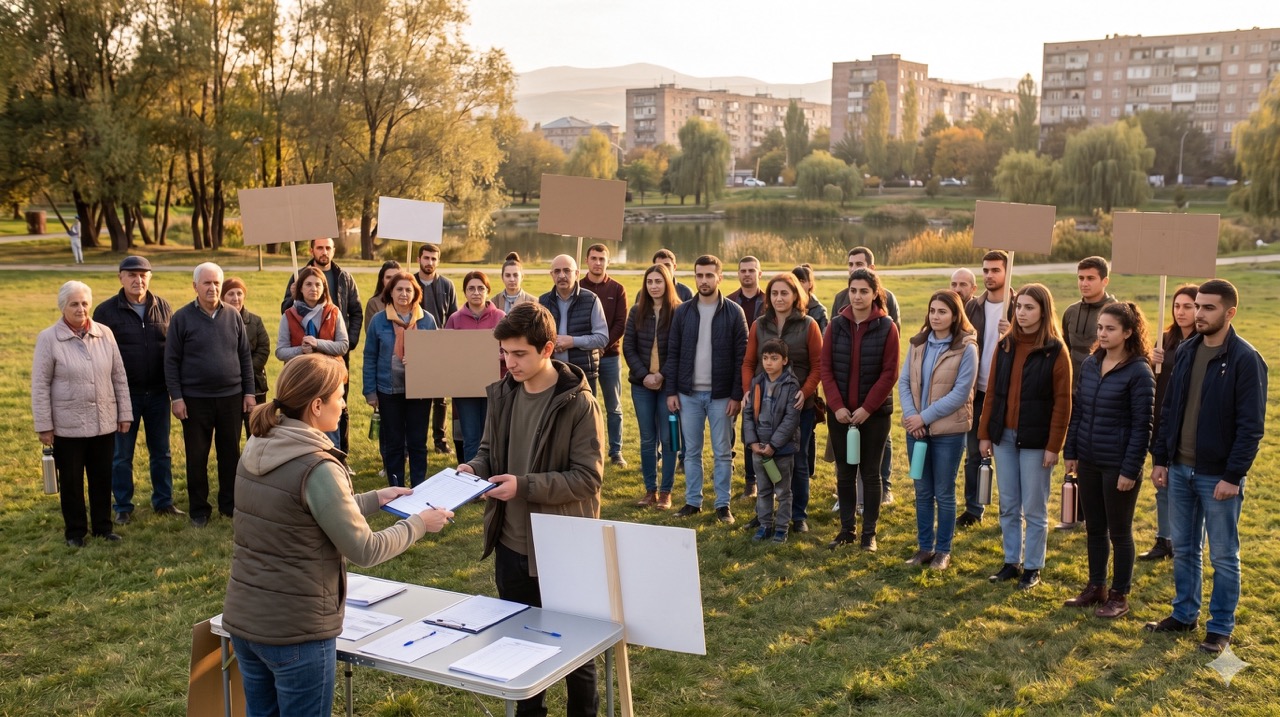
Start With the Message, Not the Signup Form
If you want to know how to recruit volunteers for a political campaign, start here. Not with tactics. Not with tools. With your message.
Build Momentum First
Momentum is the single most underrated factor in volunteer recruitment. When people feel like something exciting is happening, they want to be part of it.
Think about the campaigns that generated massive volunteer surges. Obama 2008. The Sanders campaigns. Alexandria Ocasio-Cortez's primary. They started with a message that raised expectations - making people believe their involvement could actually change something. Not in a vague, inspirational way, but in a concrete, "here's what we're going to do and here's why it matters" way.
When a campaign raises expectations, recruitment becomes a downstream effect. People don't need to be convinced to volunteer. They need to be given a way to channel the energy your message already created.
Create a Message People Want to Be Part Of
What makes a message that recruits?
Specificity over slogans. "We're going to pass paid family leave in the first 100 days" moves people. Generic pledges don't.
A clear villain or obstacle. People volunteer to fight for something - but they also need something to fight against.
A role for the volunteer. Your message should implicitly answer the question: "What would I actually do if I got involved?"
Authenticity. Volunteers can smell a focus-grouped message from a mile away.
Your communication strategy matters as much as the message itself. You need a great plan for getting it in front of people through voter engagement strategies that meet people where they already are.
Proven Strategies to Recruit Campaign Volunteers
Once you've built momentum with a compelling message, it's time to capture that energy. Here are the specific recruitment channels that work.
Relational Organizing and Peer-to-Peer Recruitment
This is the single most powerful volunteer recruitment strategy. Period.
Relational organizing means your existing volunteers recruit new volunteers through their personal networks. Friend-to-friend. Coworker-to-coworker. Trust transfers. When your friend tells you about a campaign they're excited about, that carries infinitely more weight than an ad or a cold text.
In one large-scale campaign, the "bring a friend" approach revealed organic leaders. Certain volunteers consistently brought 5, 10, even 20 people into the operation. Out of 100,000+ total volunteers, the vast majority came through relational organizing.
To make this work:
Track referrals explicitly. Ask every new volunteer who invited them.
Celebrate your top recruiters. Public recognition goes a long way.
Make it easy to invite. Give volunteers shareable links and specific events to invite people to.
Follow the data. Your referral tracking will show you who your natural organizers are. Invest in those people.
The Attention to Action Pipeline: Viral Content That Recruits
The Mamdani campaign cracked a code most campaigns never figure out: every piece of compelling content should end with a volunteer signup link. They created short, authentic videos that captured real moments from the campaign trail - not polished ad spots - and at the end of every single one, a clear call to action.
Viral posts didn't just build awareness - they directly filled the volunteer pipeline. A single video that hits the right nerve could generate hundreds of signups in 48 hours.
The lesson: don't separate your content strategy from your recruitment strategy. Every Instagram Reel, every TikTok, every tweet thread is a potential recruiting tool - if you build the signup link into the content itself.
Digital Outreach and Social Media
Social media won't replace relational organizing, but it's a powerful amplifier. Some practical tips for political outreach on social platforms:
Short-form video performs best. Reels, TikToks, and YouTube Shorts consistently outperform static posts.
Show the volunteer experience. Behind-the-scenes content of canvass launches and phone banks removes the mystery.
Use your volunteers as content creators. User-generated content from real volunteers is more trusted than polished campaign media.
Retarget website visitors. Someone who visited your website but didn't sign up is a warm lead.
Pair your social presence with an email strategy that nurtures people from casual follower to active volunteer.
Community Events and Rallies
In-person events remain one of the highest-converting recruitment channels. When someone shows up to a rally, they've already self-selected as interested. Your job is to give them the next step.
Every single event needs a clear, frictionless way for attendees to raise their hand:
QR codes on every surface. Screens, handouts, table signs.
Live signup moments. Have the speaker pause and say, "Take out your phone right now and go to..." This works shockingly well.
Staging hosts. Recruit volunteers to host house parties in their own homes. This scales your event strategy exponentially.

Phone Banking for Volunteer Recruitment
Phone banking isn't just for voter ID. In one campaign's operation, phone bankers made over 4.5 million calls, generating thousands of volunteer sign-ups in the process. Phone conversations with real people created thousands of new volunteers.
Why does phonebanking work for recruitment? Because it's a two-way conversation that's harder to ignore than a text or ad.
Lead with your story. Train phone bankers to share why they volunteer, not just read a phone banking script.
Ask for a specific commitment. "Can you join us this Saturday from 10 to 1?" converts better than "Would you like to volunteer sometime?"
Have a warm handoff plan. The gap between "yes" and the first shift is where you lose people.
Text-Based Outreach
For volunteer recruitment, p2p texting outperforms broadcast texting because real volunteers send personalized messages and respond in real time.
Personalize the first message. Use the person's name and reference how they connected with the campaign.
Keep it short. Two to three sentences max. Link to a signup page.
Time it right. Texts sent Tuesday through Thursday between 10 AM and 6 PM get the best response rates.
Follow up once. A single follow-up to non-responders can meaningfully increase signups.
Door-to-Door Canvassing for Recruitment
Canvassing is usually thought of as a voter-contact strategy, but it's also remarkably effective at finding new volunteers. In one major campaign, canvassers knocked on over 3 million doors and generated thousands of volunteer sign-ups through door-to-door conversations.
Add a recruitment ask to your canvass script. Even a simple "Would you be interested in helping out?" at the end of a voter contact conversation works.
Carry signup materials. QR codes, paper forms, or a tablet with your signup page.
Flag enthusiastic contacts. When someone at the door is clearly fired up, get them into your volunteer pipeline immediately.
Meeting Communities Where They Are
Here's a principle that separates great campaigns from good ones: go to the communities that other campaigns ignore.
The Mamdani campaign built deep relationships with Muslim communities, South Asian neighborhoods, taxi worker networks, and immigrant communities that had been overlooked for decades. When the ask came, it was received by people who already trusted the campaign.
Those communities produced some of the campaign's most committed leaders.
If your recruitment strategy only targets the already politically engaged, you're fishing in a crowded pond.
College Campuses and Youth Networks
Young people are consistently among the most enthusiastic volunteers. Youth engagement in campaigns has grown steadily. Campus organizing requires a peer-driven approach:
Find your campus champions. Identify 2-3 passionate students on each target campus.
Tap into existing organizations. Student government, issue-based clubs, cultural organizations are pre-built networks.
Make volunteering social. Young volunteers show up when it feels like a group activity with friends.
Be flexible on scheduling. Offer evening and weekend shifts with short commitments.
Setting Up Your Volunteer Recruitment Infrastructure
You've built momentum. Now you need the infrastructure to capture and channel that energy.
Create a Frictionless Sign-Up Process
Every extra field on your signup form costs you volunteers. Your initial signup should ask for three things: name, phone number, and email. That's it. A few other friction-reducers:
Mobile-first design. The majority of signups now come from mobile devices.
One-click from any channel. The path to signing up should never be more than one tap away.
Instant confirmation. Automated text or email confirming signup and next steps. This is where automations become essential.
Build a Volunteer Pipeline in Your CRM
A signup is not a volunteer. Knowing how to get volunteers for a political campaign means understanding that a signup is a person who expressed interest. Your job is to move them from interest to action.
Think of your pipeline as a funnel:
New signup. Just entered the system.
Contacted. You've reached out with a first shift opportunity.
First shift completed. Critical conversion point.
Repeat volunteer. Second or third shift completed.
Team leader. Taking responsibility and recruiting others.
Your data organization software should make it easy to see where every volunteer sits in this pipeline.
Use Automations to Follow Up Fast
Research published in the Harvard Business Review shows that companies responding to leads within five minutes are dramatically more likely to make meaningful contact; with qualification odds dropping sharply after even a 10-minute delay. The principle applies directly to volunteer follow-up: the faster you reach out, the more likely someone is to show up for their first shift.
A strong follow-up automation:
Immediate (0-5 minutes): Automated text and email confirming signup with available shifts.
24 hours later: Personal text or call from an organizer with a specific shift invitation.
3 days later: Follow-up text with a different shift option or lower-commitment ask.
7 days later: Final "we'd still love to have you" message.
Tools like organizer-experience tools automate the first touchpoint while routing warm leads to real organizers for personal follow-up.
The Development Ladder: Turn One-Time Volunteers Into Leaders
Recruitment is only half the equation. In one campaign that started with over 100,000 signups, hundreds of people stepped into formal leadership roles - developed intentionally through a clear path from first-time volunteer to campaign leader.
First shift. Show up, do the work, feel welcomed.
Return volunteer. Build relationships with other volunteers and staff.
Staging host. Host a canvass launch at your home or community space. This shifts identity from "helper" to "leader."
Team leads. Take responsibility for a turf or phone bank team.
Regional coordinator. Oversee multiple teams and help shape strategy.
The staging host concept deserves special attention. When a volunteer hosts an event in their own community, something psychological shifts. They're not just volunteering for someone else's campaign - they're bringing the campaign into their world.
And here's what makes the development ladder the ultimate answer to how to get volunteers for a political campaign: leaders recruit. Your top leaders each brought in more volunteers, who became the next generation of leaders. It's a virtuous cycle - but only if you're intentional about building the ladder.
Tracking What Works: Volunteer Recruitment Metrics
You can't improve what you don't measure. Key metrics to track:
Source tracking. Where did each volunteer come from? Referral, social media, event, phone bank, canvass, text?
Signup-to-first-shift conversion rate. Track this closely - if it's declining, your follow-up process needs work.
First-shift-to-repeat conversion rate. This is your strongest indicator of the quality of your volunteer experience.
Referral rate. The higher this number, the healthier your volunteer culture.
Time-to-first-contact. Track the median, not the average.
Retention rate by cohort. Group volunteers by signup week and track activity at 2, 4, and 8 weeks.
A good CRM for political campaigns will make pulling these reports simple.

How Solidarity Tech Helps You Recruit and Retain Campaign Volunteers
Getting volunteers into your campaign is a flow problem: capture interest, respond fast, and move people into action before momentum drops. That’s where most campaigns lose eople, between sign-up and first task. Solidarity Tech is a political campaign platform built to manage that flow end to end.
Capture sign-ups without friction. Solidarity Tech includes a form builder for mobile-friendly volunteer sign-up pages. Submissions go straight into your system, so there’s no manual transfer or delay. Every new contact is immediately available for follow-up and assignment.
Follow up while interest is still high. Timing matters. As soon as someone signs up, the system can trigger a welcome message, confirmation email, and next-step instructions. This reduces drop-off between “I’m interested” and “I’m involved,” without requiring manual outreach for every new volunteer.
See what’s actually driving recruitment. The platform tracks referral paths automatically, so you can identify who is bringing in new volunteers and which channels are working. That makes it easier to double down on what’s effective and recognize people who are actively growing your base.
Manage the full journey in one place. From first sign-up to ongoing participation, everything stays connected, communication history, event attendance, scheduling, and role progression. Campaign teams don’t need to piece together information across tools to understand where a volunteer stands or what they should do next.
Final Thoughts
Figuring out how to get volunteers for a political campaign ultimately comes down to one thing: building something people genuinely want to be part of. Start with a message worth showing up for, invest in the people who arrive, and create a culture where volunteers grow into leaders who recruit others.
The campaigns that build massive volunteer operations don't just fill shifts; they build communities. And when those communities learn how to organize themselves (how to recruit, lead, and coordinate), that capacity doesn’t disappear on Election Day. It becomes a durable civic infrastructure that shapes what happens long after the ballots are counted.
Frequently Asked Questions
How many volunteers does a political campaign need?
It depends on the size of your race and voter contact goals. A city council campaign might need 50 to 100 dedicated volunteers. A congressional race needs 1,000-5,000. Work backward from your voter contact targets: how many doors need to be knocked, how many calls need to be made, and how many volunteer shifts are required?
What's the best way to recruit volunteers with no budget?
Relational organizing costs nothing except time and intention. Ask every current supporter to personally invite three friends to a volunteer event. Host house parties in supporters' homes. Use free social media and organic content. The most effective recruitment channels - personal referrals, community events, and one-on-one conversations - don't require a budget.
How do you keep volunteers coming back after their first shift?
Three things matter most: a great first experience, fast follow-up, and a sense of belonging. Make sure first-timers are welcomed warmly, paired with experienced volunteers, and given a clear task. Contact them within 24 hours to thank them and invite them back. Build community - volunteers who make friends are far more likely to return.
When should a campaign start recruiting volunteers?
As early as possible - but only after you have a message worth recruiting for. If your campaign doesn't yet have a clear, compelling message, spending time on recruitment mechanics is premature. Once your message is solid, start building your volunteer base immediately.
How do you recruit volunteers in rural or low-density areas?
Focus on community hubs such as churches, diners, local businesses, school events, and county fairs. Identify respected community members as local ambassadors. Phone banking and texting supplement in-person efforts when distance makes door-knocking less efficient. Don't underestimate one committed volunteer in a small town - they often know everyone.
How do you handle volunteer burnout?
Burnout usually signals that you're taking on too much without giving enough back. Watch for warning signs: declining attendance, shorter shifts, and less enthusiasm. Rotate high-effort tasks, celebrate wins publicly, and remind volunteers regularly of their impact. Sometimes the fix is a lighter workload; sometimes it's a more meaningful role; sometimes it's just genuine appreciation.
read more
Explore More Volunteer-Powered Campaign Resources
From door-to-door canvassing to digital organizing, discover how candidates build movements one volunteer at a time.
/gih9dmpfhjvk97opbk43jv1ghnyf)
What is Political Volunteer Management? Key Principles for Campaign Success
/zynfrc821hqwlsdb3jnzxdq99h8m)
How to Volunteer for a Political Campaign and Make a Real Impact
/3ej1y148v9lyfjc7aquozf8o4xs7)
What Do Political Campaign Volunteers Do? Roles & Responsibilities
/2ym12d89cb2nppwy651yofryer6f)
8 Political Campaign Volunteer Retention Strategies That Actually Work
/hamozip4dpgg4gobibywcp981w6j)
How Youth Volunteering Can Uplift Your Election Campaigns
/rj771n3cek9s9f54suwx0ofq7hb5)
How to Onboard New Political Campaign Volunteers
/ubsw0fcxzqfjb1tb58q00rvw4b9e)
How to Measure Political Campaign Volunteer Effectiveness
/6tm60467tkrqtcgr11uox7bynhbf)
7 Effective Strategies for Communicating with Political Volunteers