/yqf14773eg865k76z9po9ey0ic7g)
/76zpe3834eq3t5l139qpu4ksdchb)
Content
You've recruited an incredible team of volunteers. They showed up to your kickoff event, signed up for shifts, and told you they're all in. Then, three weeks later, half of them have gone quiet.
What happened? It probably wasn't the work. It wasn't even the hours. Nine times out of ten, the answer is communication - or the lack of it.
Here's the thing most campaign managers learn the hard way: communicating with political volunteers isn't just an administrative task you squeeze in between strategy sessions. It’s the infrastructure that turns supporters into a self-sustaining organizing base during the race and after you win.
The way you talk to your volunteers - how often, through what channels, and with what level of honesty - defines whether people feel like valued members of a team or like disposable labor.
And that distinction determines whether they stick around.
Why Communication Is the Foundation of Volunteer Management
According to Gallup's 2025 State of the Global Workplace report, global employee engagement fell to just 21% in 2024, driven primarily by a sharp decline in manager engagement. When the people responsible for day-to-day team connection are disengaged, communication breaks down across the entire operation.
Strip away the corporate framing, and that applies directly to campaigns.
Research on nonprofit volunteer retention consistently identifies communication as one of the strongest predictors of whether volunteers stay or leave. A 2020 study published in Nonprofit and Voluntary Sector Quarterly found that both upward communication (volunteers feeling heard) and downward communication (being kept informed) significantly predicted organizational commitment. Not scheduling conflicts. Not burnout. Communication.
Think about that for a second. You could have the most exciting candidate, the most urgent cause, and the most well-organized field operation in the state - but if your volunteers don't feel connected to what's happening, they'll drift away.
Think about the full arc: a campaign builds momentum that drives people to the signup page. Every sign-up represents a person who was moved enough to act. Communication is how you sustain that momentum after the initial spark - the bridge between "I just signed up" and "I've knocked 200 doors, and I'm training new volunteers." Without it, all that hard-won momentum bleeds away into silence.
Your volunteers are not an audience. They're your team. And the strategies below will help you communicate with them that way.
Strategy 1: Use Multiple Communication Channels
Not everyone checks their email at 7 a.m. Not everyone is in your Slack group. Communication preferences vary dramatically by age, background, and geography. A one-channel approach guarantees you're missing somebody.
Email for Updates and Context
Email is your workhorse for anything requiring detail - weekly recaps, training documents, scheduling overviews. Keep emails scannable with headers, bullet points, and bold text.
A strong campaign email strategy means your volunteers always have a reference point they can return to.
Text Messages for Time-Sensitive Information
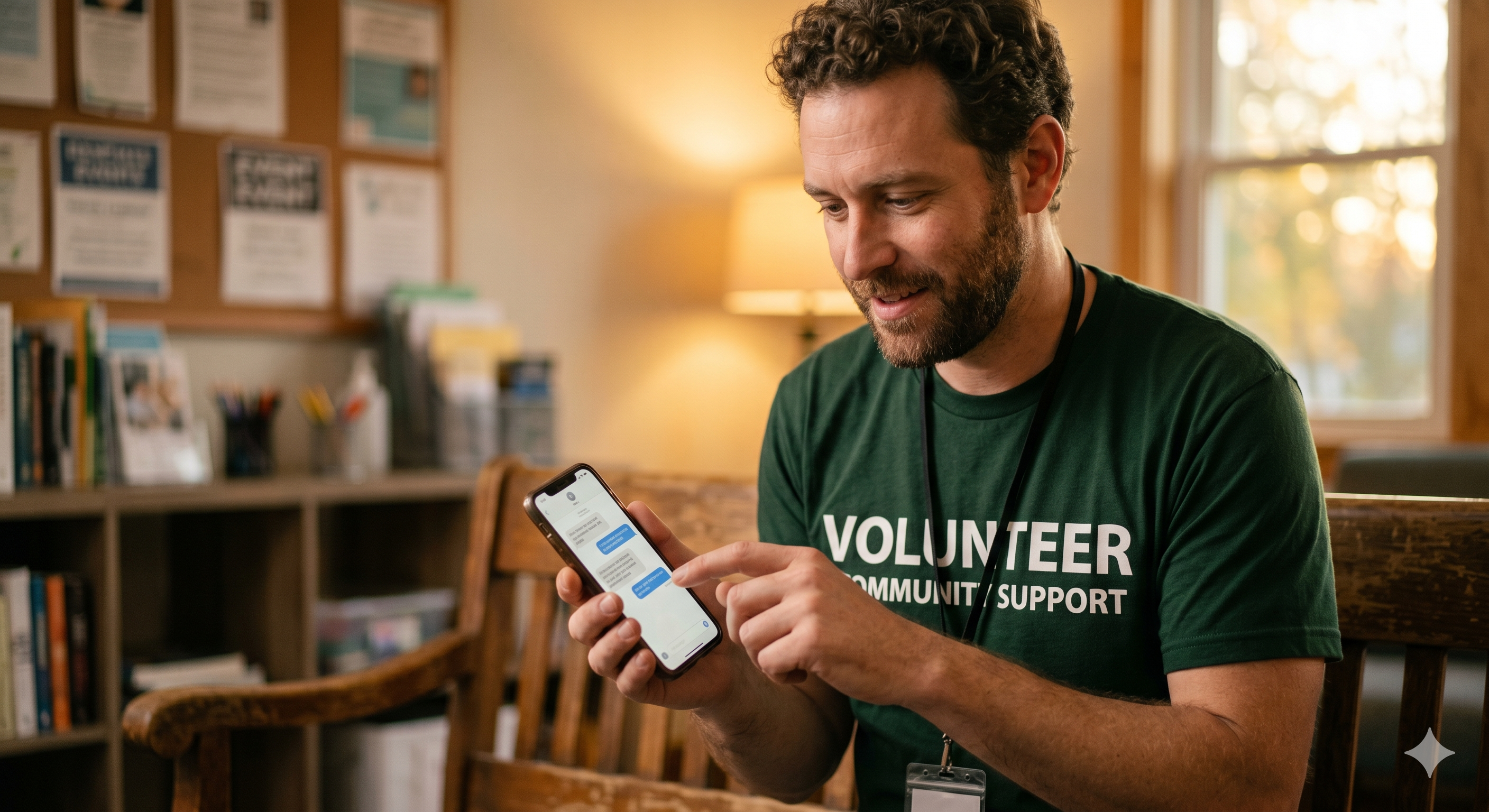
Shift reminders, last-minute location changes, day-of logistics - these belong in a text. Industry data suggests that 90% of texts are read within three minutes of delivery, while emails can sit unread for hours or even days. That speed difference is why texting is the backbone of real-time volunteer coordination.
But respect the channel. If you send lengthy strategy updates via text, people will start ignoring your messages entirely.
Phone Calls for Personal Connection
Nothing replaces a human voice. A two-minute phone call to thank a volunteer or personally invite someone to take on a new role carries more weight than a dozen emails.
People in high-engagement leadership roles need more personal, direct communication to feel valued, a principle that holds across organizational research on retention and motivation.
Your shift leads and team captains deserve a phone call, not just a mass update.
Campaign phone software can help coordinators manage personal outreach without losing track of contacts.
Group Chats for Community Building
WhatsApp groups, Signal threads, GroupMe channels - these are where volunteer culture actually lives. Set clear expectations, assign a moderator, and let them breathe. Some of the best retention happens in organic conversations between shifts.
Social Media for Public Recognition
When a volunteer does something incredible, put it on your public channels. Tag them (with permission). Public recognition serves double duty - it makes the volunteer feel seen, and it shows potential recruits what your culture looks like.
The bottom line: communicating with political volunteers means meeting people where they are.
Strategy 2: Establish a Communication Cadence
Sporadic communication is almost worse than no communication. When volunteers only hear from you when you need something, they feel used. A predictable rhythm builds trust automatically.
Weekly Updates (What Happened + What's Coming)
Every week, send a recap answering two questions: What did we accomplish? What's ahead? A five-paragraph email with key stats and a preview of the coming week is plenty. Consistency is the point - when volunteers know they'll hear from you every Monday morning, it becomes a ritual.
Pre-Shift Reminders (24 Hours and 1 Hour Before)
The first 24 hours out confirm logistics. The second, one hour before, is a quick "see you soon" that reduces no-shows.
Text blast software makes this easy to automate. Schedule reminders once, customize per shift, and let the system do the rest.
Post-Shift Thank Yous (Within 24 Hours)
This is the one most campaigns skip - and the one that matters most. A thank-you within 24 hours tells your volunteer: I noticed you showed up. I value what you did. You matter.
Monthly Big-Picture Updates
Once a month, zoom out. Share where the campaign stands overall - milestones reached, goals set, and the road ahead. This is also the right time to be transparent about challenges.
Setting up automations for your communication cadence means these touchpoints happen reliably, even during the most chaotic stretches.
Build Leader-Owned Comms, Not Just Campaign-Owned Comms
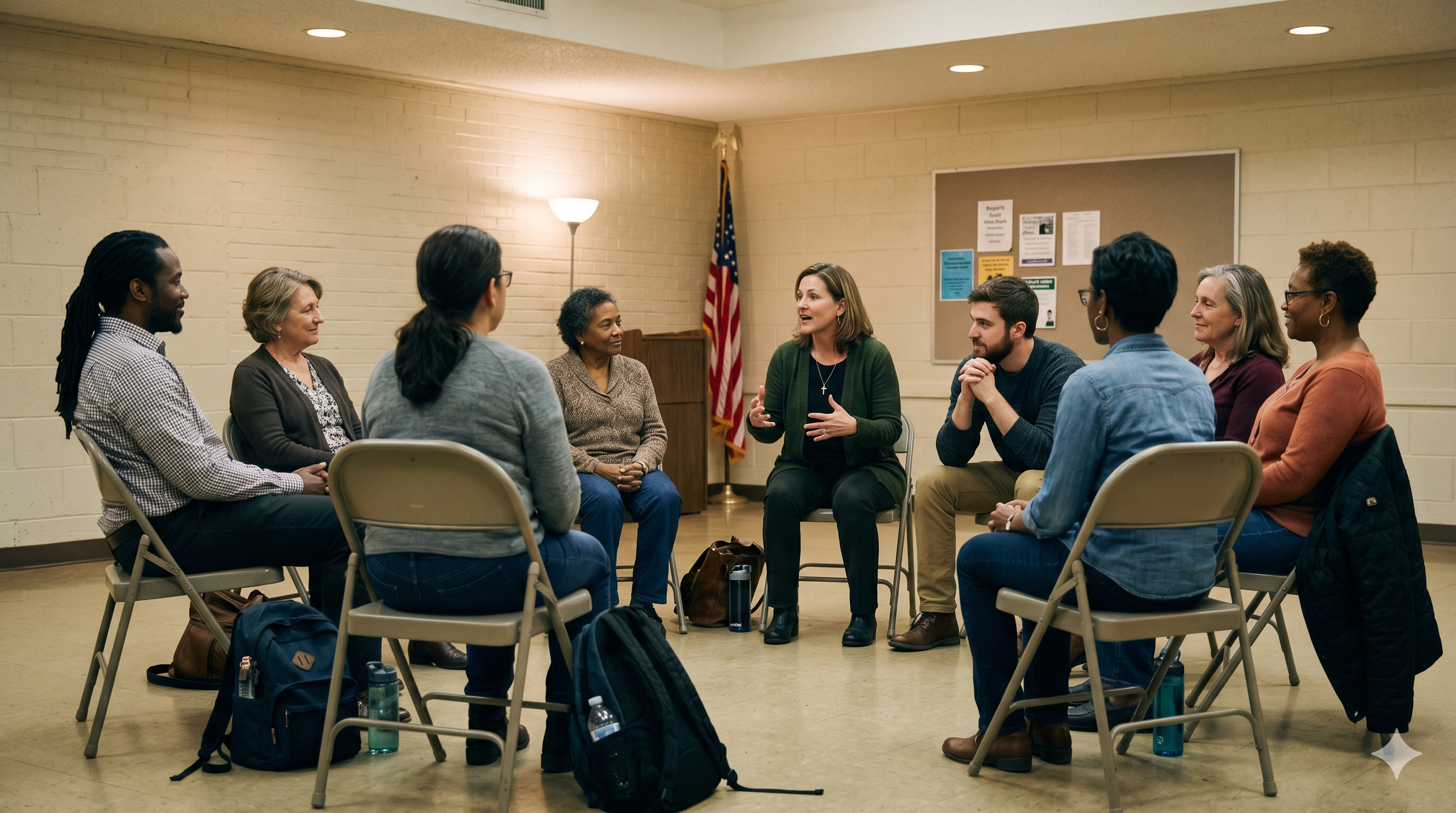
Consistency doesn’t mean everything flows from headquarters. Strong campaigns build communication pods: team captains who own updates for their turf, shift leads who manage their own group chats, and regional organizers who adapt messaging to their communities.
When communication lives only at the center, everything bottlenecks. When trusted leaders communicate directly with their teams, coordination accelerates.
The goal isn’t a perfect broadcast. It’s local leaders who can communicate, coordinate, and mobilize without waiting for HQ.
Strategy 3: Make It Two-Way (Listen, Don't Just Broadcast)
One-way communication is a megaphone. Two-way communication is a conversation. Your volunteers can tell the difference immediately.
Create Feedback Channels
Give volunteers a clear, easy way to share what's working and what's not. This could be a simple Google Form after each shift, a dedicated feedback channel in your group chat, or a standing agenda item in team meetings.
The format matters less than the signal. When you create a feedback channel, you're saying: your experience matters to us.
Act on What You Hear
Collecting feedback you never act on is worse than not collecting it at all. When a volunteer says the check-in process is confusing, fix it - then tell them you fixed it because of their suggestion.
This loop - listen, act, report back - is the engine of trust. Gallup's Q12 framework identifies "my opinions seem to count" as one of the twelve core elements that predict employee engagement.
Debrief After Every Shift
Build a five-minute debrief into every shift with three questions:
What went well? Start with the positive.
What was challenging? Create space for honest feedback.
What should we change? Turn observations into action items.
When someone's suggestion is implemented on the next shift, they stop being a volunteer and become a co-creator.
Take this one step further: let experienced volunteers help shape scripts, outreach tactics, and communication norms. Invite team leads into planning conversations. When strategic decisions are made, communicate not just what changed, but why.
Shared governance builds ownership. Ownership builds commitment. And commitment builds power that doesn’t collapse when the campaign ends.
Strategy 4: Connect Every Task to Impact
Volunteers don't just want to know what to do. They want to know why it matters. Connecting tasks to larger outcomes is one of the most powerful motivators in any organization; a principle supported by decades of research on intrinsic motivation and purpose-driven work.
Share the Numbers
Be specific. "We had a great week" means nothing. "Our phone bank team made 4,200 calls this week, reaching 1,100 voters in three priority precincts" means everything.
Tell Stories from the Field
Stats inform. Stories inspire. When a canvasser changes a voter's mind or a phone banker follows a phone banking script and connects with an undecided voter, share that story. Pair numbers with narratives.
Show How Individual Work Adds Up
The Mamdani campaign built communication systems that connected each person's work to overall progress - so a volunteer making 50 calls on a Tuesday night could see how those calls fit into the week's goals.
Effective political outreach always ties individual action to collective impact.
Strategy 5: Personalize Your Communication
If mass messages are all your volunteers ever receive, they'll start to feel like a number in a spreadsheet.
Segment by Role and Engagement Level
A first-time volunteer and a team captain who's worked 30 shifts shouldn't get the same email. New volunteers need onboarding information and encouragement. Veteran volunteers need leadership opportunities and a deeper strategic context.
Understanding what political phone banking or what political P2P texting looks like is very different depending on whether you're talking to someone who just signed up or someone who's been doing it for months.
Use Names and References to Past Contributions
"Hey Sarah, thanks for leading the phone bank shift last Thursday - your team hit 120% of goal" hits completely differently than "Thanks to all our volunteers this week." Reference specific contributions whenever possible.
Adjust Tone for Different Audiences
The way you communicate with college students should sound different from how you communicate with retired professionals. This isn't about being fake - it's about being a good communicator.

Strategy 6: Be Transparent About Challenges
Most campaigns only communicate good news. Your volunteers aren't naive. When you go quiet during hard times, the silence speaks louder than anything.
Share Bad News Honestly
When something affects your volunteers' work - a strategy shift, a setback, a timeline change - tell them directly. Teams receiving honest communication during difficult periods consistently maintain higher trust than teams that only hear curated good news.
Admit Mistakes and Course-Correct Publicly
Did a scheduling error leave volunteers outside a locked venue? Own it. Apologize specifically. Explain what you're doing to prevent it. This accountability builds more loyalty than a flawless operation ever could.
Ask for Help When You Need It
When you're short-staffed for a critical weekend, say so. People respond to honest asks far more readily than vague, everything-is-fine recruitment pushes. Transparency isn't weakness - it's the fastest path to a team that trusts you.
Strategy 7: Prevent Burnout Through Supportive Communication
Campaign burnout doesn't just happen to staff. Your most dedicated volunteers are at serious risk if communication only focuses on what you need from them.
Volunteer burnout is one of the leading causes of organizational turnover — and it's often preventable through better communication. The National Council of Nonprofits' volunteer management resources emphasize that managing volunteer wellbeing is as important as managing paid staff.
Check In on Wellbeing, Not Just Availability
"Can you work Saturday?" is logistical. "How are you doing? I know you've been putting in a lot of hours," is human. Build wellbeing check-ins into your communication rhythm.
Normalize Taking Breaks
This is counterintuitive when you're fighting for every vote. But explicitly telling your volunteers it's okay to step back for a week is one of the smartest things you can do.
The alternative is they disappear quietly and never come back. When you normalize breaks, you give people permission to recharge and a clear path to return. Include something in your monthly update like: "If you've been going hard and need a breather, take one. We'll be here when you're ready."
Recognize Signs of Overcommitment
Train team leads to spot warning signs: a volunteer signed up for every shift, someone whose tone has shifted from enthusiastic to terse, a person canceling last-minute after weeks of perfect attendance. Reach out personally - not to guilt them, but to genuinely check in.
Building Your Communication Infrastructure
All seven strategies share a common requirement: systems that make consistent communication possible without burning out your staff.
The Unified Inbox: One Number, Real Conversations
The Mamdani campaign used one phone number that every volunteer could text, with real staff managing conversations. A volunteer could text at 10 PM with a question and get a human response. The unified inbox meant staff could see every interaction in one place - so responses had full context.
Smart Targeting: The Right Ask to the Right Person
Instead of blasting every volunteer with every ask, smart campaigns target specific messages to specific people. The Mamdani campaign would query everyone who'd texted in the last week and attended two or more events, then make a tailored ask: higher response rates, fewer unsubscribes, and volunteers who felt understood.
Aggregated Reminders: Respect the Inbox
If someone's signed up for three shifts this week, don't send three separate reminders. Send one clean message with all upcoming commitments: "Here's your week: Tuesday phone bank at 6 PM, Thursday canvass at 10 AM, Saturday GOTV at 9 AM." That's respectful and organized.
How Solidarity Tech Powers Volunteer Communication
If you’re applying the strategies above, your communication likely falls into a few repeat situations: sending updates, coordinating shifts, following up, and checking in when someone goes quiet. The challenge is managing all of that consistently without losing context.
Solidarity Tech is an all-in-one political campaign platform that keeps those communication flows organized in one place.
When you need to send updates without losing relevance
Volunteers don’t all need the same message. Some are active, some are new, some haven’t shown up in weeks. Instead of sending one broad update, you can target messages based on what people have actually done, which makes communication feel relevant instead of mass.
When you’re following up after activity
After a shift or event, timing matters. You want to acknowledge participation, suggest next steps, or keep momentum going. When past activity and communication history are visible in one place, follow-ups become specific and easier to manage at scale.
When communication happens across multiple channels
Some volunteers respond to texts, others to email, others only pick up calls. Managing this across separate tools usually leads to gaps. Keeping calling, texting, and email connected means you can switch channels without losing the thread of the conversation.
When you’re trying to avoid over-communication
Too many messages is just as damaging as too few. When reminders, updates, and check-ins are coordinated in one system, it’s easier to avoid sending duplicate or unnecessary messages.
When someone stops responding
One of the hardest parts of communication is noticing silence. If a volunteer hasn’t shown up or replied, you need to catch that early. With all activity and outreach visible together, it’s easier to identify who needs a follow-up before they fully disengage.
The principle behind this approach aligns with what the Nonprofit Technology Network (NTEN) emphasizes: communication works when it’s timely, relevant, and consistent.
Solidarity Tech helps campaigns apply that in practice, not by replacing human interaction, but by making it easier to manage.
Final Thoughts
Communicating with political volunteers is the invisible infrastructure that holds every successful campaign together. When your team feels informed, heard, and connected to the bigger picture, they stay engaged through the toughest stretches. When they feel like an afterthought, they disappear quietly.
The seven strategies in this guide share one thread: treat your volunteers like partners, not an audience to manage. Be consistent, be honest, be personal, and listen as much as you speak. The campaigns that communicate well don’t just retain volunteers. They build distributed leadership networks that can organize, adapt, and act long after Election Day.
FAQs on Communicating with Political Volunteers
How often should I communicate with political volunteers?
At a minimum, volunteers should hear from you once a week through a general update, plus specific messages around any shifts they're signed up for. Your most active volunteers should get more frequent, more personal communication. Err on the side of more rather than less - silence is almost always worse than over-communication.
What's the best communication channel for reaching volunteers quickly?
Text messaging, by a wide margin. With open rates above 90% and most texts read within minutes, it's the fastest way to reach your team. But match the channel to the message: texts for urgent logistics, email for detailed updates, phone calls for personal conversations, and group chats for community building.
How do I communicate with volunteers who aren't responding?
Don't assume silence means disinterest. Try a different channel first. If you still can't reach them, send one final warm, low-pressure message: "We've missed you and wanted to check in. No obligation - just want to make sure you're doing okay." Sometimes people drift away because they feel guilty about missing a shift, and a no-pressure message permits them to re-engage.
How do I handle negative feedback from volunteers?
With gratitude, first. A volunteer giving negative feedback still cares enough to speak up. Thank them, ask follow-up questions, and take visible action. If the feedback warrants a change, make it and credit the person who raised the concern. If it doesn't, explain your reasoning respectfully. The worst thing you can do is ignore it.
How can I maintain communication quality as my volunteer base grows?
This is where technology becomes essential. When you have 50 volunteers, a spreadsheet, and group text work. When you have 500 or 5,000, you need systems that automate operational touchpoints so your team can focus personal energy on high-impact communication only humans can do. Invest in infrastructure early.
How do I re-engage volunteers who've gone inactive?
Start by understanding why they left. Then reach out personally - not with a mass email, but with an individual message referencing their past contribution and offering a specific, low-commitment way to come back. Something like: "Hey Marcus, your work on the September phone bank was incredible. We've got a one-evening event next Thursday if you're up for it. No pressure either way."
read more
Explore More Volunteer-Powered Campaign Resources
From door-to-door canvassing to digital organizing, discover how candidates build movements one volunteer at a time.
/clz9urucq2agfuy8md9d9i25eekx)
What is Political Volunteer Management? Key Principles for Campaign Success
/zmem14s3jw3fmqy2mk3d9a1znxu1)
How to Get Volunteers for Political Campaigns: Proven Strategies
/060jourc3sf4hdwastld29sowzvm)
How to Volunteer for a Political Campaign and Make a Real Impact
/1mrctb37ruxwbijdsb57ywnqdjww)
What Do Political Campaign Volunteers Do? Roles & Responsibilities
/xb3k5w9igtmwxg2ztjeims687rss)
8 Political Campaign Volunteer Retention Strategies That Actually Work
/tzdjggx2jxtzci6llqstijoi1tpj)
How Youth Volunteering Can Uplift Your Election Campaigns
/o77yl0a4z0w5iy4vpy9qmm3ohffa)
How to Onboard New Political Campaign Volunteers
/2496gvdn0xfczwsmdr508ogqilqg)
How to Measure Political Campaign Volunteer Effectiveness