/t1zvser7bn6j287wmxbhyqgxs7f0)
/6gmrso6rwti1pwsxjt3bgqolq9jt)
Content
You've been thinking about it. Maybe it's been nagging at you since the last election, or maybe something happened in your community that lit a fire. Either way, you're here because you want to do more than just vote - you want to roll up your sleeves and get involved in a political campaign. Good, the world needs more people like you.
But where do you actually start? What does campaign volunteering look like in practice? And can one person really make a difference?
The short answer: absolutely. If you're figuring out how to volunteer for a political campaign, we'll walk through everything - how to find the right race, what volunteer roles look like, what happens on your first shift, and how a single afternoon knocking on doors can turn into something much bigger.
Why Volunteer for a Political Campaign?
Most people who think about volunteering never actually do it. Life gets busy. It feels intimidating. You wonder whether your few hours would even matter. According to the latest AmeriCorps Volunteering and Civic Life in America research, about 28% of Americans formally volunteered in 2023, but political campaign volunteering is a much smaller share of that.
Those hours matter more than you think. During the 2025 New York City mayoral race, a grassroots operation mobilized over 100,000 volunteers. Those volunteers made more than 4.5 million phone calls and knocked on over 3 million doors - people who started by showing up for a single shift and ended up running entire field operations.
What those numbers represent isn’t just turnout. It’s organized people power, neighbors choosing to build something together. Campaigns don’t scale because of a single charismatic candidate. They scale because ordinary people decide to become part of the infrastructure that makes collective action possible.
And the research backs this up. Studies from Yale's Institution for Social and Policy Studies have consistently shown that personal, face-to-face contact from volunteers is the single most effective way to increase voter turnout. One well-trained volunteer having authentic conversations can shift turnout by 6-9 percentage points among the people they talk to.
How to Find a Political Campaign That Needs Volunteers
So you're in. Now you need to find the right fit.
Look for Local Races First
National campaigns get all the attention, but local races are where your time has the most outsized impact. A city council race might be decided by a few hundred votes. A state legislative primary might come down to a few thousand.
In a presidential race, you're one of millions of volunteers. In a local race, you might be one of thirty. Your contribution is felt immediately - and the candidate will probably know your name by the end of the first week.
Check your city or county's election board website to see what's on the next ballot. School board, city council, county commission, state legislature - these races shape your daily life more directly than anything happening in Washington.
Check Party Organizations and Advocacy Groups
Your local Democratic, Republican, or third-party chapter is a solid starting point. They'll know which campaigns are actively recruiting volunteers and can connect you quickly.
Don't overlook issue-based organizations either. Groups focused on housing, climate, immigration, labor rights, or education often run their own political programs or partner closely with aligned candidates.
Search Online Volunteer Platforms
Most modern campaigns have an online sign-up process. Visit the candidate's website and look for a "Get Involved" or "Volunteer" button. Many use a campaign form builder that lets you sign up and indicate your interests in just a couple of minutes. That signup page is the critical bridge between the momentum that brought you here and the organizing that turns your energy into real impact.
Sites like Mobilize, VolunteerMatch, and Vote.org also aggregate volunteer opportunities across multiple campaigns and organizations. They're especially useful if you're not sure which specific campaign to join yet.
Types of Campaign Volunteer Work
Campaign work is far more varied than most people imagine. There's a role for every personality type - from the extrovert who thrives on face-to-face conversations to the detail-oriented introvert who'd rather work behind the scenes.
Door-to-Door Canvassing
This is the gold standard of campaign volunteering. Nothing moves voters like a real person standing on their porch, ready to listen.
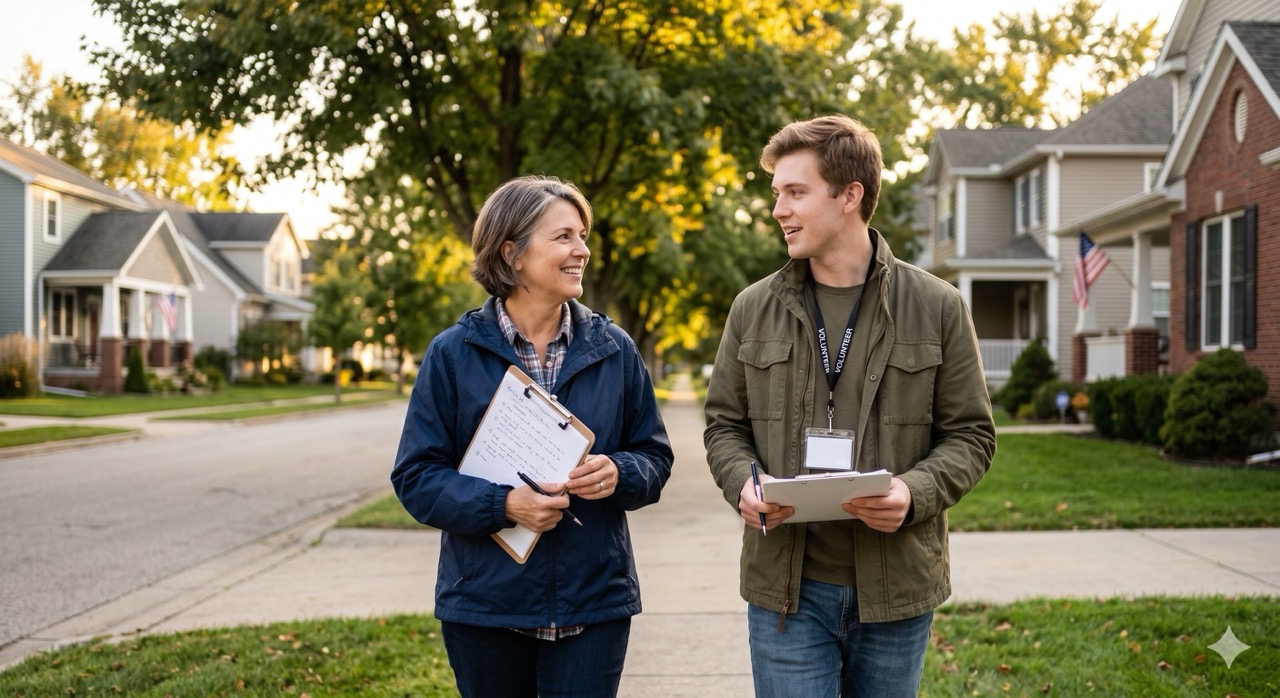
A typical canvass involves walking a targeted list of addresses in a specific neighborhood. You'll have a script to guide the conversation, but the best canvassers treat it as exactly that - a conversation, not a sales pitch. You listen, you share why you care, and you answer questions honestly. Modern campaigns equip canvassers with a field app on their phone, so you can log responses and navigate your walk list without carrying paper.
Canvassing is physical - you'll be on your feet for a few hours - but it's also deeply rewarding. There's something that shifts inside you when a stranger tells you about their healthcare struggles because you bothered to ask.

Phone Banking
If knocking on doors isn't your thing, phonebanking is the way to go. Campaigns use calling tools that automatically dial through a list so you can focus on the conversation, not the logistics.
You'll follow a phone banking script, but the goal is the same as canvassing: connect with voters, share information, and listen. Phone banking is especially effective for voter ID (figuring out who supports your candidate), GOTV pushes in the final days, and reaching voters in areas that are hard to canvass on foot.
A well-organized phone bank can reach hundreds of voters in a single evening. Multiply that across dozens of volunteers, and you start to see how those 4.4 million calls happen.
Peer-to-Peer Texting
Texting programs have exploded in recent years. Text messages have a 98% open rate compared to about 20% for email, and response rates on texts tend to run significantly higher than phone calls.
As a peer-to-peer texter, you'll send personalized messages to voters from your phone or laptop. It's less intimidating than calling and incredibly flexible - you can text during your lunch break or from your couch at 9 PM.
Event Support
Campaigns run on events - rallies, town halls, fundraisers, debate watch parties, and community forums. Every single one needs volunteers to help with setup, registration, crowd management, and breakdown. Event volunteering is a great entry point if you're not ready to talk to strangers on the phone or at their door.
Data Entry and Voter File Management
This one doesn't sound glamorous, but it's the backbone of every winning campaign. If you're detail-oriented and comfortable with spreadsheets or databases, you can help manage the voter file through a campaign's CRM. This might mean entering data from paper sign-in sheets, cleaning up duplicate records, or helping code survey responses from canvassing and phone banking.
Social Media and Digital Outreach
Have a knack for writing, graphic design, or video? Campaigns need content constantly. You might help draft social media posts, create shareable graphics, or clip and edit video from events.
Digital outreach also includes relational organizing tools that help you identify voters you already know personally - friends, family, coworkers, neighbors - and reach out to them directly. Messages from someone you know are dramatically more persuasive than messages from a stranger.
What to Expect on Your First Volunteer Shift
Here's what a typical first canvassing shift looks like, start to finish.
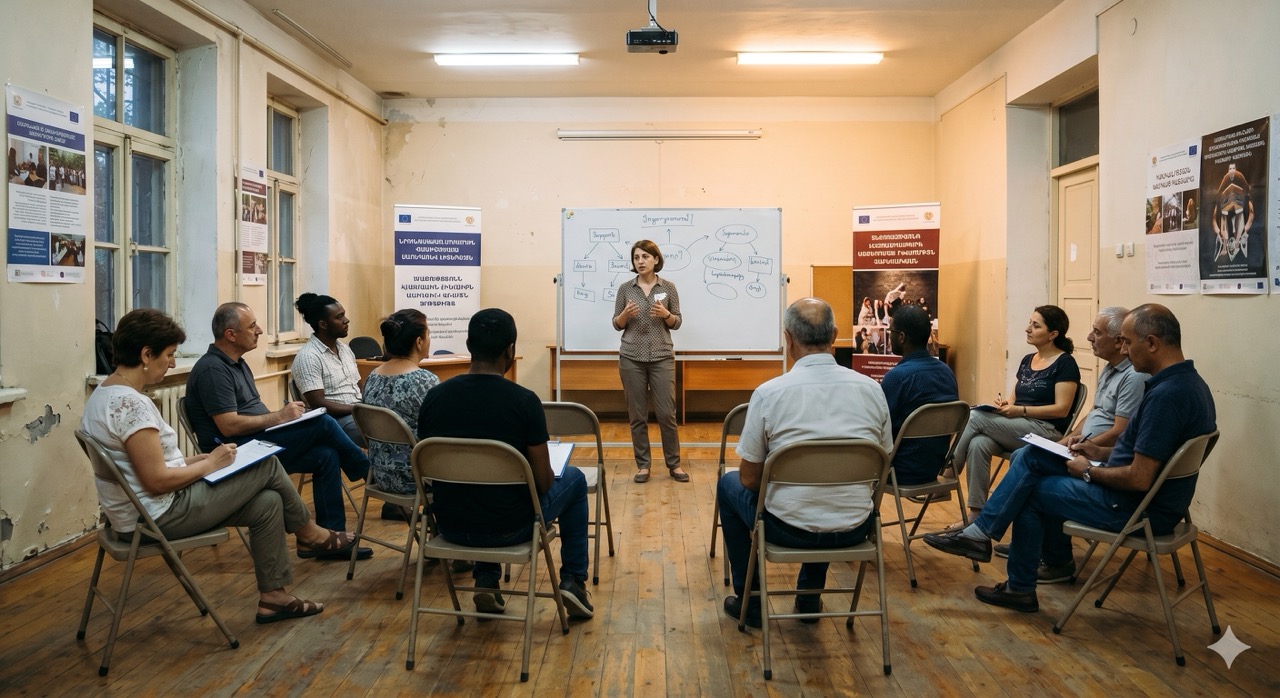
You arrive at the staging location. This might be the campaign office, a volunteer's living room, a community center, or a church basement. Someone will greet you, hand you a sign-in sheet, and probably offer you a snack.
You sit through a brief training. This takes 10-15 minutes. You'll learn the basics: who the candidate is, what the key issues are, how to use the canvassing app, and how to handle common voter questions. You'll get a script, but the trainer will emphasize that it's a guide, not a straitjacket.
You get your turf assignment. A staging lead will pair you with a partner and assign you a walk list - usually 30-50 doors within a defined area.
You hit the doors. Your partner will probably take the first few doors, so you can watch. Then it's your turn. You knock, introduce yourself, and start the conversation. Some people will chat for five minutes. Others will say "not interested" and close the door. Both are fine. You log the interaction in the app and move on.
You come back and debrief. After two to three hours, you return to the staging location. The team shares stories - the funny moments, the tough conversations, the doors that reminded you why you're doing this. This part matters more than you'd think. It's where strangers become teammates.
Most volunteers say it was way less scary than they expected.
The Volunteer Development Ladder: From First Shift to Leadership
Once you understand how to volunteer for a political campaign, the next question is: how far can you go? The best campaigns don't just want your time - they want to invest in you.
Stage 1: Show Up (First-Time Volunteer): You sign up, you show up, you do a shift. The campaign's job is to make you feel welcome, give you a positive experience, and ask you to come back. Just showing up puts you ahead of the overwhelming majority of people who thought about it but didn't.
Stage 2: Build Skills (Trained Volunteer): You come back for a second shift. Then a third. You start to get comfortable with the script and develop your own style. You might attend a deeper training on persuasion techniques or what voter mobilization looks like in practice. At this stage, you're building real skills that transfer to every part of your life - active listening, handling rejection gracefully, persuading without being pushy.
Stage 3: Lead Others (Team Lead): After several shifts, someone on the campaign will notice you're reliable, skilled, and good with people. They'll ask if you want to lead a canvass team - taking responsibility for 4-8 other volunteers during a shift. You'll run the training, assign turf, check in with your team, and lead the debrief. You'll also be the person who makes a nervous first-timer feel like they belong.
Stage 4: Run Operations (Field Lead or Staging Host): At the top of the volunteer ladder, you're running an entire staging location - recruiting volunteers, coordinating logistics, managing multiple team leads, and hitting goals. Some people even host staging locations out of their own homes. This is the level where you go from "I help the campaign" to "I'm building this." Many of the volunteers who stepped into leadership roles during the 2025 NYC mayoral campaign had never been involved in politics before.
The magic of this ladder is the "bring a friend" effect. One person becoming a team lead creates capacity for eight more volunteers. That's how 104,000 people get mobilized.
And that capacity doesn’t disappear on Election Day. When volunteers become leaders, when neighborhoods build organizing muscle, when relationships are formed through real work, that infrastructure outlasts any single race. Elections end. Organized communities don’t.
Do You Need Experience to Volunteer?
No. Full stop. You don't need political experience, issue expertise, or a smooth-talking personality. What you need is willingness - willingness to show up, to learn, to have imperfect conversations with real people, and to come back again.
Common fears and the truth behind them:
"I don't know enough about the issues." You'll get training before every shift. The script covers the key points. And voters respond more to authenticity than expertise - telling someone "I'm here because I care about affordable housing in our neighborhood" is more powerful than reciting a policy platform.
"I'm too introverted for canvassing." Some of the best canvassers are introverts. They listen more than they talk, and voters notice. There are also plenty of behind-the-scenes roles.
"I only have a few hours a week." That's enough. A single three-hour canvass shift means 30-50 voter conversations.
"What if someone is rude to me?" It happens occasionally, but the vast majority of people are polite. Your team lead will prepare you for difficult interactions.
The barrier to entry is genuinely low. The barrier to impact is even lower.
How Technology Makes Campaign Volunteering Easier
If you're learning how to volunteer for a political campaign in 2026, modern tools have removed a huge amount of friction. When you canvass, you've got a mobile app with a GPS-enabled walk list, a built-in script, and real-time voter response logging. Phonebanking now happens from your kitchen table with an auto-dialer handling logistics. Text banking works the same way - centralized platforms let you manage thousands of conversations from your personal device.
Platforms like Solidarity Tech power the infrastructure behind many of these grassroots operations. The philosophy: digital tools should bridge to in-person relationships, not replace them. The app gets you to the door. The conversation is still yours.
What's changed most is the accessibility. You can sign up at 11 PM on a Tuesday and show up to a canvass on Saturday morning without ever making a phone call. For people who find political outreach intimidating, this kind of low-friction entry point makes all the difference.
How Solidarity Tech Helps Campaign Volunteers Make an Impact
If you’re joining a political campaign, your impact depends on how quickly you get into real work and how clearly that work is structured. The right system makes that happen.
Solidarity Tech is used by campaigns, unions, nonprofits, and advocacy organizations to organize volunteers so they can contribute from day one.
You get from sign-up to action faster. When you volunteer, you don’t want to wait days for instructions. Campaigns using Solidarity Tech can immediately route you to a shift, send next steps, and assign you to real tasks. That means you start contributing right away instead of sitting in a backlog.
You know exactly what to do. Whether you’re canvassing, calling voters, or doing outreach, the platform provides scripts, contact lists, and clear instructions in one place. You’re following a defined task that’s part of a larger campaign plan.
You can volunteer from anywhere. If you can’t join in person, you can still contribute through built-in calling and texting tools. That lets you take part in outreach from home, in short sessions or longer shifts, depending on your availability.
Your work actually counts toward campaign results. Every call, conversation, or shift is logged. Campaign teams use that data to track progress and decide where to focus next. That means your time is not just “helpful,” it’s part of how the campaign makes decisions and moves forward.
You stay engaged as you do more. As you participate more, campaigns can assign you to more responsibility, from regular shifts to helping coordinate others. The system helps organizers see who is active and ready to take on more.
Final Thoughts
Now you know how to volunteer for a political campaign. Here's the truth: the hardest part is the first five minutes. Walking into a room full of strangers, picking up a phone to call someone you've never met, knocking on that first door - it's uncomfortable.
But discomfort is where growth lives. And on the other side of that first awkward shift is a version of you that knows, from firsthand experience, that ordinary people can shape the outcome of elections.
And when enough ordinary people organize together, they shape what happens long after the ballots are counted.
You don't need to be an expert. You don't need to commit your whole life. You just need to show up once - and then decide if you want to come back. Chances are, you will.
FAQs on How to Volunteer for a Political Campaign
Do campaign volunteers get paid?
No, campaign volunteers are unpaid. However, campaigns typically cover food and drinks during shifts, and some reimburse canvassers' mileage. If you're looking for paid campaign work, look into field organizer or canvass director positions - many campaigns hire staff who started as volunteers.
How old do you have to be to volunteer for a political campaign?
There's no legal minimum age in most states. Research from CIRCLE at Tufts University shows that early political engagement among young people leads to higher rates of civic participation throughout adulthood. Many campaigns welcome high school students. Check with your specific campaign for their policies.
Can I volunteer for a political campaign remotely?
Yes. Phone banking, text banking, social media support, data entry, and some organizing roles can all be done from home. It's a great option if you have mobility challenges, live far from the campaign's base, or prefer working from home.
How much time do I need to commit as a campaign volunteer?
There's no minimum commitment for most campaigns. Some volunteers show up for a single two-hour shift; others give 20+ hours a week before Election Day. Start with whatever you can manage - even one shift makes a difference.
Can I volunteer for a campaign if I'm not a U.S. citizen?
Yes. While non-citizens cannot vote or donate to campaigns, they are legally permitted to volunteer their time. Federal Election Commission (FEC) regulations specifically allow volunteer services from anyone, regardless of citizenship status.
How do I know if a campaign is well-organized?
Look for clear communication after you sign up, a structured training before your first shift, a defined check-in and debrief process, and team leads who make you feel supported. Understanding how to run a political campaign well means building a culture where volunteers want to return.
read more
Explore More Volunteer-Powered Campaign Resources
From door-to-door canvassing to digital organizing, discover how candidates build movements one volunteer at a time.
/be0k1dfb5yjvd36oi0u1fwmhh3v2)
What is Political Volunteer Management? Key Principles for Campaign Success
/ilfhdh92l3z1d8n6fjzucl084l7t)
How to Get Volunteers for Political Campaigns: Proven Strategies
/ot84z157l1zzaugdz254sprjna3e)
What Do Political Campaign Volunteers Do? Roles & Responsibilities
/aq9svqbuqyk0osf36z007qk0wlz1)
8 Political Campaign Volunteer Retention Strategies That Actually Work
/0e5q04l0bwemak7v3m4ds1gjhjt8)
How Youth Volunteering Can Uplift Your Election Campaigns
/djslgvk7a3o6n034ubowk1wpjyr4)
How to Onboard New Political Campaign Volunteers
/ngxtw8xqcgznu6e0cf72ui4thmbq)
How to Measure Political Campaign Volunteer Effectiveness
/owvejgrhkahidvw55lf05dg585d6)
7 Effective Strategies for Communicating with Political Volunteers