/2tw8s4e3q28nhjuaxserjnr15f2y)
/r8m7297oz9vv0rmhmiaggc0w8b4d)
Content
Have you ever wondered why some political campaigns generate massive voter turnout while others struggle to get people to respond to their texts? Political P2P text insights reveal the data-driven patterns about how peer-to-peer text messaging performs in real campaigns.
This method lets campaign volunteers send personalized text messages directly to voters. Unlike automated blasts, each message is sent and replied to by a real person, creating genuine one-on-one conversations at scale. Let’s explore what political P2P texting is in more detail together.
What is P2P texting in political campaigns?
P2P texting is a campaign strategy in which volunteers send individual text messages to voters and supporters via specialized software platforms. Each message gets sent by a real person, not a computer system.
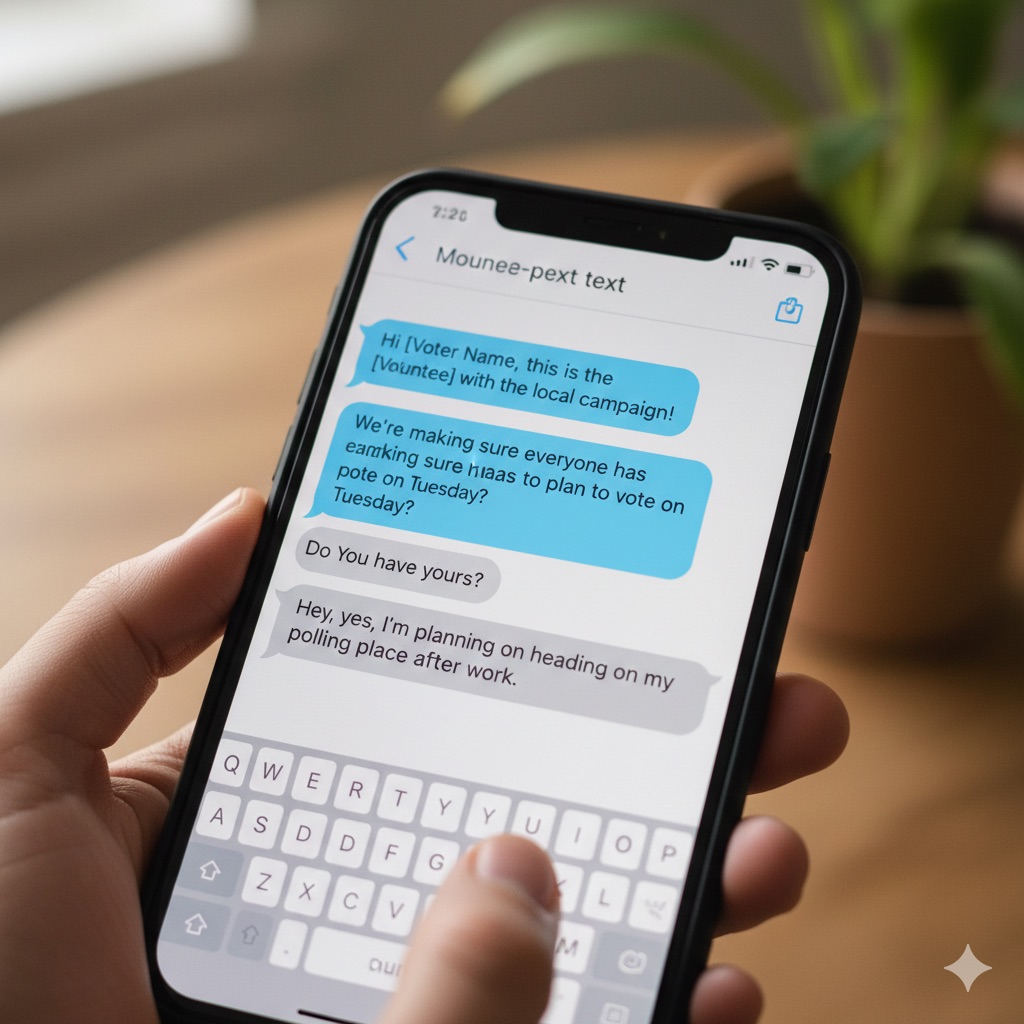
The volunteer sees the recipient's name and information, then sends a personalized message. When someone responds, that same volunteer can continue the conversation. This creates authentic dialogue between campaign supporters and potential voters.
Political campaigns use P2P texting because it combines personal connection with the ability to reach thousands of people. A single volunteer can send dozens of texts per hour while maintaining genuine conversations with each person who responds.
The key difference from automated texting is the human element. Recipients can tell they're talking to a real person, not a bot. This builds trust and increases the likelihood that someone will take action, such as voting, donating, or attending an event.
Compliance rules that protect your campaign
Text message compliance has become stricter over the past few years, with new rules in 2024 expanding enforcement mechanisms. Violations can shut down your texting program overnight, which can feel overwhelming when you're managing multiple campaigns with limited resources.
TCPA consent requirements
The Telephone Consumer Protection Act requires express written consent before sending text messages to cell phones, with violations carrying penalties of $500-$1500 per message. For political campaigns, this means clear documentation showing people agreed to receive your messages.
Political campaigns can text people who provided their phone numbers in specific situations:
Supporters who signed up on your website with a checkbox agreeing to receive texts
Volunteers who gave contact information during registration
Donors who opted in during the contribution process
People who signed petitions that included text message consent language
Your opt-in process needs clear language. "By providing your phone number, you consent to receive text messages from [Campaign Name] about voting and events" works better than vague language about "updates."
Keep records showing when and how each person consented. If someone files a complaint, you need proof that they agreed to your texts.
10DLC registration and carrier filtering
Phone carriers now use strict filtering systems that can block your messages before they reach supporters. 10DLC registration has become required for most political texting campaigns, with properly registered campaigns achieving 99%+ deliverability rates.
This system requires organizations to register their texting campaigns with carriers and verify their identity. Without proper registration, carriers may block up to 90% of your messages.
The registration process takes 2-4 weeks, so plan ahead before launching major texting campaigns. You submit your organization's information, campaign details, and sample messages to carriers for approval.
Apple iOS filtering creates additional challenges. iPhones now automatically filter messages from unknown senders into a separate folder that many people never check. Messages from properly registered campaigns reach the main inbox more reliably.
What response rates reveal about message effectiveness
Response rates vary dramatically based on specific message elements that most campaigns overlook. When campaigns analyze thousands of P2P conversations, clear patterns emerge about which messages drive engagement and which get ignored.
Message length and timing patterns
Message Element | High Response Rate | Low Response Rate |
|---|---|---|
Length | 160-200 characters | Over 300 characters |
Tone | Conversational, personal | Formal, scripted |
Questions | Strategic, specific | Generic or none |
Timing | Early evening | Late night/early morning |
Short messages consistently outperform long ones. People respond to texts that feel like normal conversations, not campaign speeches. Messages over 300 characters see response rates drop by 40% or more.
Timing data shows that early evening (5-7 PM) generates the highest response rates across all demographic groups. Messages sent during late-night or early-morning hours see response rates drop by 50% or more.
Personalization and question strategy
Targeted messaging increases response rates by 40-60% compared to generic messages. "Hi Maria, are you planning to vote on November 5th?" generates more responses than "Hi, are you ready to vote for change?"
The key is using the information you already have about supporters, such as their neighborhoods, previous activities, or stated concerns. This makes messages feel relevant to their specific situation.
Strategic questions work when they're specific and actionable. "Are you planning to vote on November 5th?" generates responses because it requires a simple yes/no answer about a concrete action. Generic questions like "What issues matter most to you?" rarely get replies because they feel like homework.
Active vs passive engagement
When someone texts back "Yes, I'm planning to vote" or "Can you send me polling location info?", they're 4x more likely to follow through on their commitment than people who simply read your message without responding.
Campaigns that track only delivery rates miss this critical distinction. Active responses indicate genuine interest and create opportunities for deeper engagement. These conversations often lead to volunteer recruitment, donations, or event attendance.
Simple emojis like ✓ or 📍 can increase response rates by 15-20%, but overuse backfires quickly. A single emoji that reinforces your message works better than multiple decorative ones that make texts look unprofessional.
Proven strategies that increase deliverability
Text deliverability depends on technical factors you can control. Campaigns that understand these systems consistently achieve 95%+ delivery rates, while others struggle with rates below 60%.
Sender reputation management
Your sender reputation affects whether messages reach supporters' phones at all. Carriers track how recipients interact with messages from your phone number. High engagement signals trustworthy content, while complaints or blocks hurt future deliverability.
Start with a clean contact list containing only people who explicitly opted in to receive your messages. Sending to purchased lists or scraped phone numbers damages your sender's reputation immediately.
Write messages that sound like genuine person-to-person communication rather than mass marketing. Avoid words like "FREE," "URGENT," or "ACT NOW" that carriers flag as promotional content.
Keep links to a minimum in initial messages since carriers view them as spam indicators. When you do include links, use your campaign's main domain rather than link shorteners. Messages with bit.ly or tinyurl links get filtered 60% more often than those with recognizable domains.
Message content and frequency
Consistent sending patterns help maintain a good sender reputation. Sudden spikes in message volume can trigger spam filters, so ramp up your texting gradually rather than launching with thousands of messages at once.
Your texting platform handles much of the technical compliance work automatically. Most platforms process opt-out requests, maintain sender reputation, and provide guidance for carrier registration requirements.
Campaigns using compliant platforms typically achieve delivery rates above 95%, while those that ignore these requirements often achieve rates below 60%. The difference directly impacts your ability to reach supporters when it matters most.
Most effective use cases for political campaigns
Political P2P texting works best for specific organizing scenarios. Understanding which situations benefit from P2P versus other communication methods helps campaigns use their resources effectively.
Voter mobilization and GOTV
GOTV efforts consistently achieve 15-25% response rates when volunteers text confirmed supporters with specific voting information. "Hi John, your polling location is Lincoln Elementary at 123 Main St. Polls close at 8 PM. Are you planning to vote today?" generates responses because it provides concrete, helpful information.
Event turnout increases by 30-40% compared to email-only invitations when organizers send personalized text reminders 24 hours before rallies or town halls. The immediate nature of texting makes it ideal for last-minute mobilization.
Voter registration drives see 20-35% response rates when volunteers text people in targeted demographics with registration deadlines and requirements. The key is timing these messages close to registration deadlines, when people feel urgency to act.
Fundraising and donor engagement
Small-dollar fundraising through P2P texting generates average response rates of 8-12% for first-time asks and 18-25% for follow-up messages to previous donors. The personal nature of P2P messages makes them feel less like mass solicitations.
Campaigns typically raise $15-30 per positive response when volunteers send personalized fundraising messages that connect specific donations to concrete campaign activities. "Hi Sarah, we're $2,000 short of our voter outreach goal. Can you chip in $25 to help us reach 500 more voters?" works better than generic appeals.
Recurring donor cultivation works particularly well via text because supporters can quickly confirm monthly contributions or update payment methods without lengthy phone calls or email exchanges.
Issue advocacy and coalition building
Policy awareness campaigns achieve 12-20% response rates when volunteers text supporters about upcoming votes or policy changes that directly affect their communities. The immediacy of texting makes it ideal for time-sensitive advocacy.
Action alerts via P2P texting generate 25-40% higher participation rates compared to mass emails for activities like calling legislators or attending hearings. People are more likely to act when they receive a personal message rather than a mass email.
Coalition building benefits from P2P texting because volunteers can quickly coordinate across organizations and confirm their participation in joint actions. The conversational nature helps build relationships across organizational boundaries.
How Solidarity Tech Enhances Political P2P Texting
Solidarity Tech's P2P texting platform addresses the specific challenges that cause political texting campaigns to fail by integrating all organizing tools into a single system.
Integrated contact management and segmentation
The platform's unified supporter database eliminates coordination headaches by storing all contact information in one place. Organizers can segment contacts by voting history, engagement level, or any custom field they define, all within the same system where texting campaigns are launched.
Contact profiles track every interaction automatically. When a volunteer texts someone, that conversation appears in the person's activity timeline alongside their donation history, event attendance, and email responses. This prevents volunteers from asking people to do things they've already done.
The query builder lets campaigns create complex audience segments, such as "Spanish-speaking voters who attended the last rally but haven't been contacted in 30 days." These targeted lists feed directly into P2P texting campaigns, eliminating the need to export data between systems.
Multi-channel communication tools
Each chapter gets a dedicated local phone number for all texting and calling, so supporters recognize messages as coming from a consistent source. This dedicated number improves delivery rates because carriers trust established numbers more than rotating short codes.
The platform's multilingual support automatically addresses diverse constituencies. The system tracks each contact's preferred language and routes conversations to volunteers who speak it.
Message templates provide starting points while allowing personalization for each conversation. Templates can include merge tags that automatically insert supporter names, voting locations, or other relevant information from their profiles.
Performance tracking and optimization
The comprehensive reporting system displays message delivery rates, response rates, and conversion metrics in real time. Campaign managers can identify which volunteers generate the most engagement and which messages work best for different audiences.
Team activity reports help identify volunteers who excel at P2P texting and those who might benefit from additional training. The system tracks response rates, conversation quality, and follow-up completion for each volunteer.
Campaign performance metrics measure how P2P texting conversations translate into concrete actions, such as event attendance, donations, or voter turnout. This integrated tracking connects text responses to actual outcomes so that organizers can measure return on investment.
Building stronger campaigns through data-driven texting
Political P2P text insights show that the most successful campaigns use texting as part of comprehensive organizing strategies rather than as a standalone communication tool. When texting data informs phone bank target lists, text responses trigger email follow-ups, and text-generated RSVPs connect to event management systems, campaigns build sustained engagement that wins elections.
The coordination overhead of managing separate systems consumes staff time that organizers need for direct voter contact. Modern organizing platforms eliminate this administrative burden by handling technical integration while presenting simple interfaces that volunteers can use effectively.
Response rate data, message timing analysis, and conversion tracking become more valuable when they combine with insights from other communication channels. This comprehensive view helps campaigns identify their most committed supporters and design appropriate outreach strategies for different engagement levels.
Your organizing will be stronger when P2P texting connects directly to your other campaign activities and when you can track the whole journey from initial text conversation to voter turnout or volunteer recruitment.
FAQs about political P2P text insights
How can smaller political campaigns afford P2P texting platforms with limited budgets?
Most P2P texting platforms charge per user, which can cost small campaigns $300-500 monthly for just a few staff members. But some platforms, like Solidarity Tech, use transparent pricing with unlimited users, so campaigns pay only for messages sent rather than team size.
Can political campaigns track different volunteer groups within one P2P texting platform?
Yes. Modern P2P texting platforms let campaigns organize volunteers by team, region, or project using segmentation tools. Each group can manage its own contact list and conversations, while campaign managers still see unified reports across all groups for full oversight.
How do political campaigns train volunteers for P2P texting without extensive technical experience?
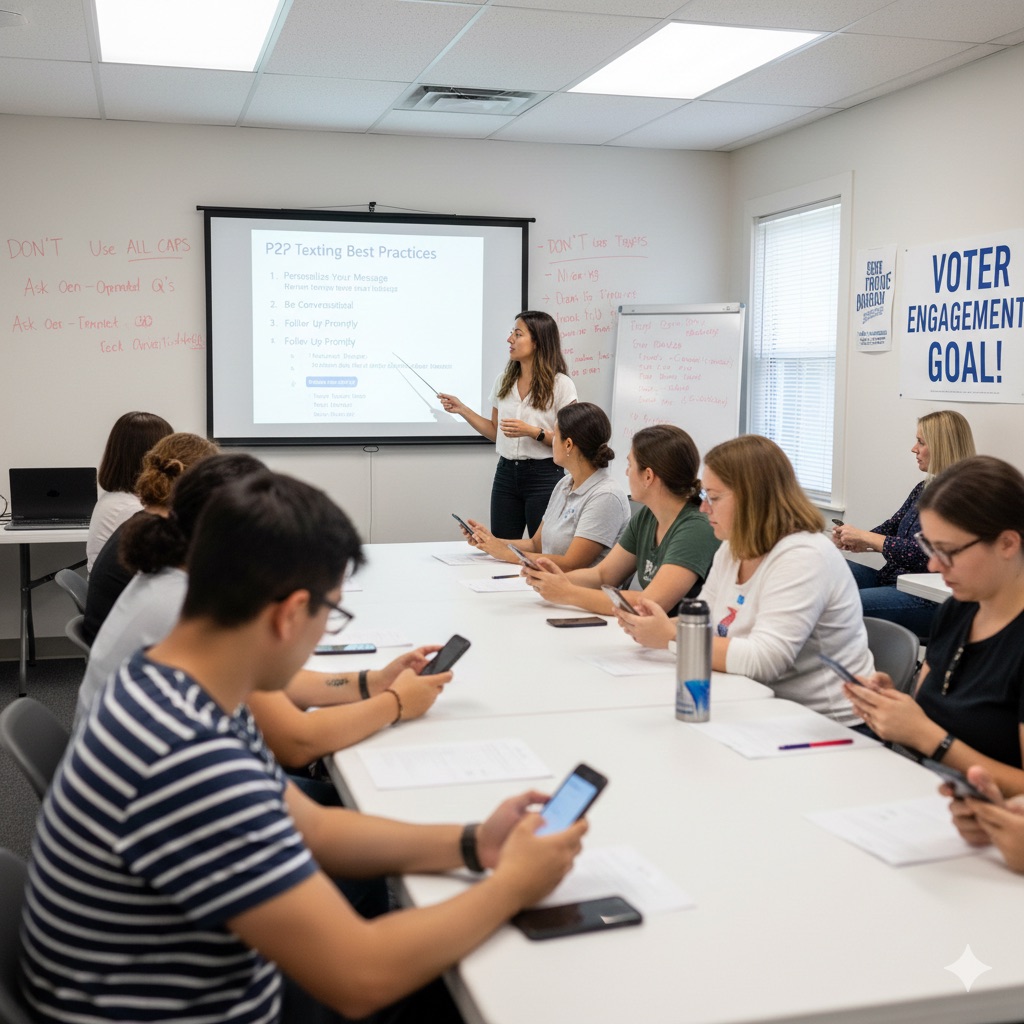
Start with 15-minute training sessions covering message templates, basic response handling, and opt-out procedures rather than overwhelming volunteers with complex features, and use platforms designed for organizers that provide simple mobile apps.
What response rates should political campaigns expect from P2P text messaging campaigns?
Well-executed P2P campaigns typically generate 15-25% response rates, with GOTV efforts reaching 25-30% when texting confirmed supporters and fundraising campaigns averaging 8-12% for first-time asks to new prospects.
Does P2P texting work effectively for issue advocacy campaigns outside of election periods?
Yes. P2P texting performs strongly year-round, not just during elections. Advocacy campaigns that text supporters about policy changes see 12-20% response rates, while action alerts tied to legislative votes or petitions drive 25-40% higher participation than email alone.
read more
Explore More Political Campaign Insights
From voter mobilization to digital outreach and field organizing, explore proven strategies and tools to run winning political campaigns.
/gxmeldeegn88zrt642wo92yfa4cb)
What is Voter Mobilization and How to Build Winning Campaigns
/ryv2w3dysmgmobroa2pi4g3xta09)
Voter Engagement Strategies to Turn Supporters Into Voters
/hnqqflpjp7nmrglqlqcfekj2lcti)
How to Run a Political Campaign and Build Winning Coalitions
/ve0v502kl0j2aa47whr9fzotv7c5)
What is the Best CRM for Political Campaigns?
/3lijpc8xp4htm8dhdfchkta0hcjp)
Political Technology Examples and Effective Campaign Tools
/n4vgb4ndmd94y2oos41vbc8hp2pg)
How to Build Political Campaign Websites That Win Support
/bv5dh9dhuf83olst8g1y8vx86ygj)
How to Use Political Outreach for Stronger Campaign Engagement
/31d6mkzrkuk05p4y1nz3tn702dt6)
What is Political Phone Banking? How Campaigns Build Power