/uszecndydzs14odukhozqy0ald5l)
/wxeraossvz5rcixjmhh6jsplohqm)
Content
Winning elections comes down to one thing: getting your supporters to vote. You can have the best message and the strongest candidate, but if people don’t show up on election day, you lose.
Voter mobilization means turning support into action through personal contact and steady follow-up. It’s the difference between “I support you” and “I voted.”
Research from Yale’s Lessons from GOTV Experiments shows that direct contact (calls, door knocks, texts, and personal outreach) can boost turnout by 7-10 percentage points. So, the most effective voter mobilization tactics combine phone banking, door-knocking, text messaging, relational organizing, and even more. Let’s explore them.
What is voter mobilization?
Voter mobilization, often called get-out-the-vote (GOTV), is a focused push to ensure your identified supporters actually cast their ballots. It usually happens in the final weeks before an election and relies on personal contact rather than mass messaging.
The core tactics are simple but powerful:
Phone banking: Call supporters to remind them to vote and answer quick questions about where and when.
Door knocking: Talk face-to-face with voters in key neighborhoods.
P2P Texting: Send short reminders with polling details and early-voting information.
Relational organizing: Encourage supporters to reach out to their friends, family, and coworkers.
Campaigns track every contact to see who’s voted and who still needs a nudge. One email or robocall rarely changes anything. Honest conversations and repeated reminders do.
In close races, turnout decides everything. Mobilizing just 2-3% more of your supporters can be the difference between winning and losing.
Why voter mobilization matters for winning campaigns
Most campaigns pour time and money into persuasion: ads, debates, and messaging to sway undecided voters. But the real gains often come from mobilizing the people who already support you. Turning out your base costs less, converts faster, and delivers results where it counts: at the polls.
Think of it this way: in a race with 10,000 voters, getting just 200 more of your supporters to vote could flip the outcome. Reaching and persuading 200 undecided voters, on the other hand, takes far more time and money.
Here’s what voter mobilization delivers:
Turnout advantage: Even a small bump in turnout (3-4% among your supporters) can swing a close race.
Resource efficiency: Calling 100 supporters to remind them to vote is cheaper and more effective than persuading 100 undecided voters.
Organizing power: Mobilization builds volunteer teams that stay active long after election day.
Community strength: Every phone bank and canvass helps train new organizers, identify leaders, and strengthen connections across your base.
Campaigns that prioritize direct voter contact consistently see measurable results. Research shows that personal outreach (calls, texts, or door knocks) boosts turnout by 7-10 percentage points compared to no contact.
In a 2023 city council race, targeted get-out-the-vote efforts raised turnout in key precincts by 8%, securing a 312-vote win in a contest with just 3,847 total ballots cast.
In another state legislative campaign, 5,000 supporters were contacted by phone and text during the final week. Turnout among contacted voters hit 73%, compared to 58% among those who weren’t reached.
If you want to strengthen your organizing, shift more resources from broad persuasion to targeted mobilization. Look at your last campaign’s precinct data. Find areas where your supporters live, but turnout lagged. Often, mobilizing just 200-500 more of your existing voters is all it takes to change the result.
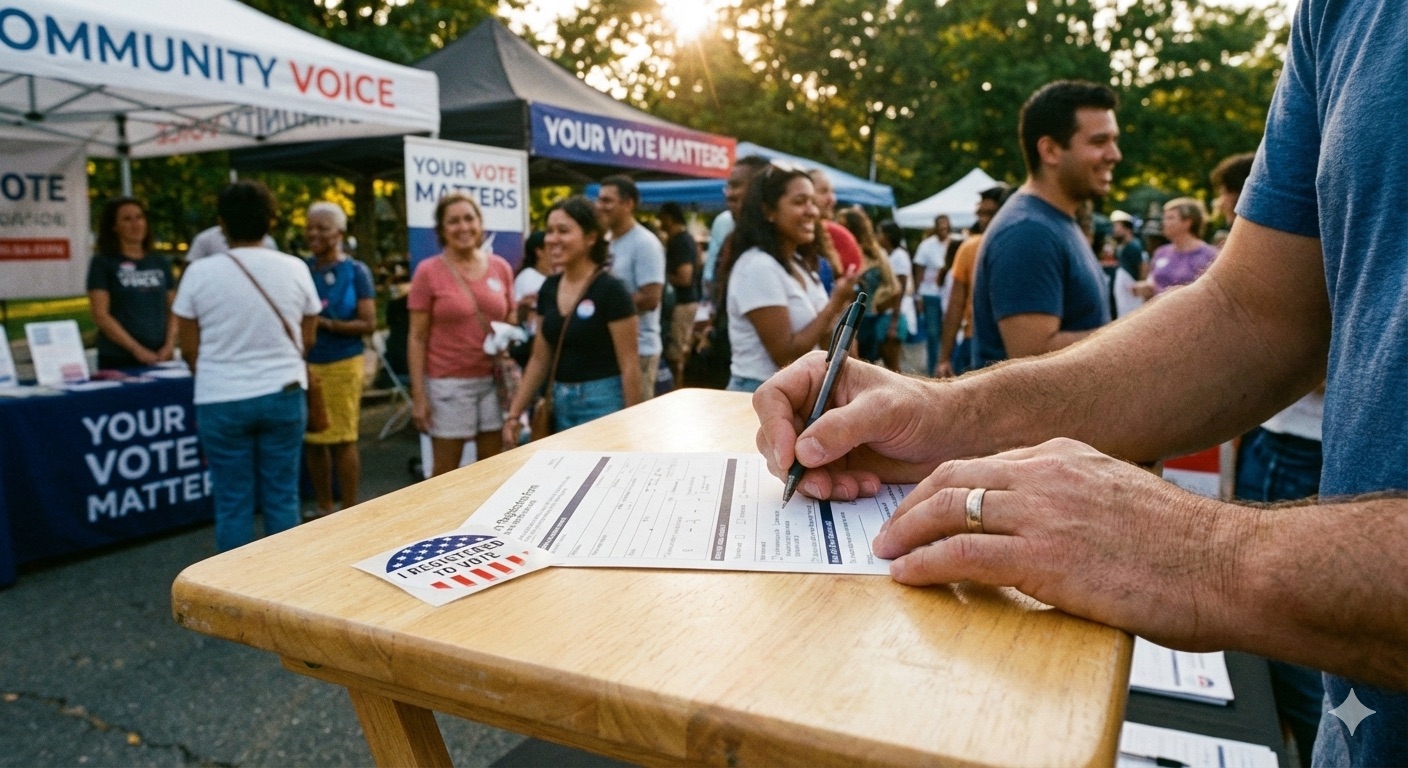
Proven voter mobilization strategies
Winning campaigns use more than one contact method; they coordinate them. Start with broad outreach to find supporters, then follow up with personal contact as election day nears.
Each touchpoint should move a voter closer to action: texts get attention, calls confirm plans, and in-person contact seals the commitment. When your outreach works together, interest turns into turnout.
Phone banking for direct voter contact
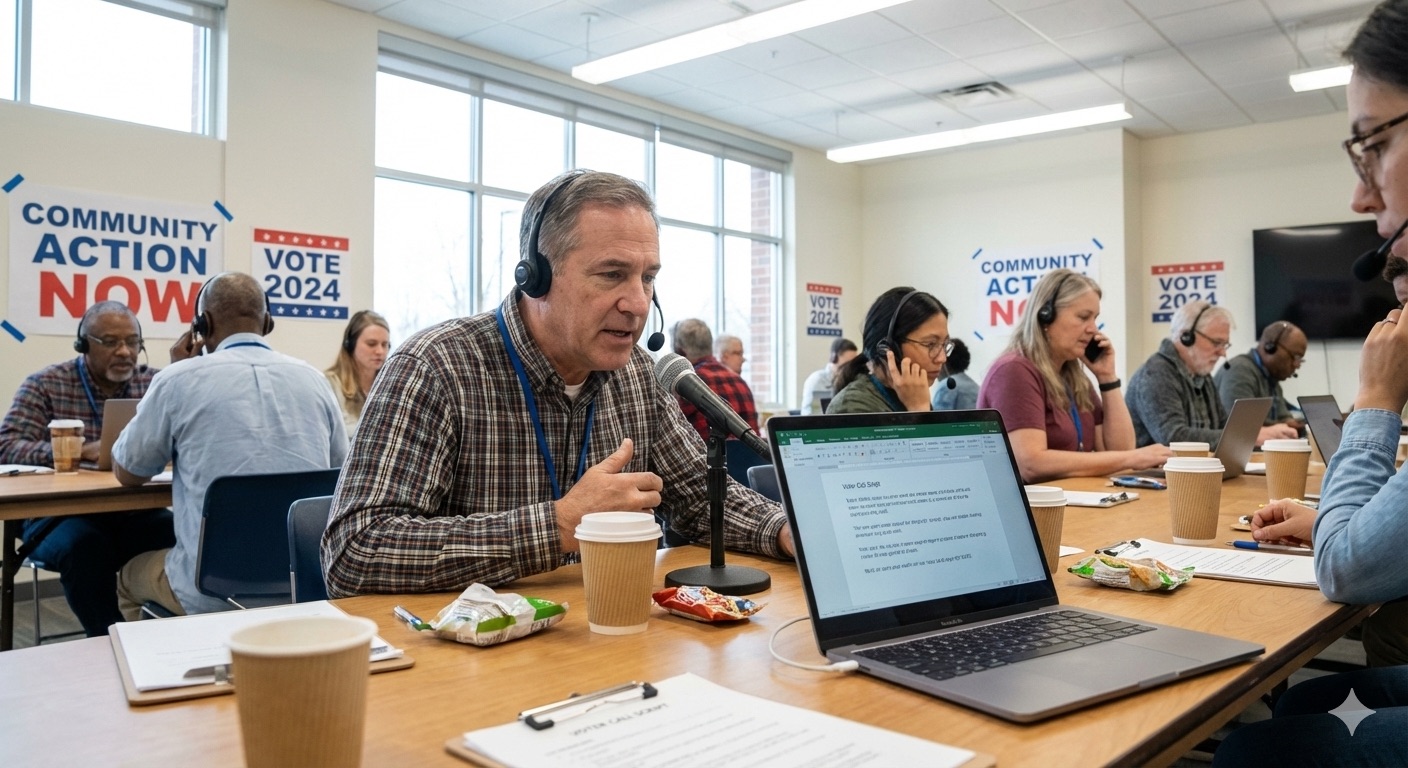
Phone banking is one of the fastest ways to reach supporters personally. In a single evening, volunteers can have hundreds of conversations, reminding people to vote, answering quick questions, and confirming plans.
Modern campaigns use predictive dialer systems to skip unanswered calls and voicemails, connecting volunteers directly to live voters. That saves time and boosts the number of meaningful conversations.
A live call does what a text can’t: it builds accountability. When a voter says, “Yes, I’ll vote on Tuesday,” they’re far more likely to follow through. It also gives volunteers a chance to solve small problems in real time, such as confusion about polling places, scheduling issues, or transportation concerns.
What works best:
Train volunteers on the script and tone before calling.
Use predictive dialers to maximize live conversations.
Track every response so you can focus on follow-up calls in the final 48 hours.
The results speak for themselves. In one Wisconsin state legislative race, volunteers made 5,000 calls in the week before election day. Turnout among contacted voters reached 71%, compared to 67% among those who weren’t called, a difference of 200 votes in a race decided by 412.
Door-to-door canvassing in target neighborhoods
Knocking on doors is still one of the most effective voter mobilization tactics. People remember when someone takes the time to stand on their porch and ask for their vote; it feels personal and real in a way a call or text can’t match.
Face-to-face conversations are hard to ignore. Research shows that canvassing can raise turnout by around 6%, especially in neighborhoods where your campaign shows up consistently. Voters see that your team cares enough to meet them where they are.
Canvassers can read body language, adjust their tone on the spot, and leave materials that stay visible long after the visit.
What works best:
Use walk lists from your voter file to target specific houses.
Focus on neighborhoods with many supporters but historically low turnout.
Train canvassers on safety, key talking points, and data recording.
Prioritize weekend shifts, especially the two weekends before election day.
The impact adds up. In one North Carolina mayoral race, volunteers canvassed three neighborhoods where turnout had averaged only 42%. Over four weekends, they knocked on 2,847 doors and spoke with 1,203 voters. Turnout in those areas climbed to 52%, adding 287 votes in a race won by just 531.
Text messaging and digital outreach
Texting reaches voters where they’re most active, on their phones. A quick text sent at 7 a.m. on election day saying “Polls are open until 8 p.m.” can reach someone before they head to work.
Compared to phone calls or door knocks, digital outreach scales fast. One organizer can send 1,000 texts in the time it takes to make 30 calls. Texts also leave a written record that voters can easily check later for polling locations or early voting hours.
What works best:
Time your messages. Send reminders at key moments in the voting timeline: when early voting starts, a few days before it ends, and on election day morning.
Segment your lists. Tailor messages to different voter groups for higher engagement.
Use social media strategically. It’s a good amplifier, but not a replacement for direct voter contact.
A school board campaign in Colorado proved the power of simple reminders.
The team sent three text blasts over two weeks: one announcing early voting, one as a mid-period reminder, and a final message on the last day. Of the 3,200 supporters who received texts, 19% voted early, compared to 13% among those who didn’t, adding 192 early votes that helped secure the win.
Relational organizing through personal networks
The most persuasive voices in any campaign aren’t staff or volunteers calling from a list. They’re friends, family, and coworkers.
Relational organizing taps into those trusted connections, asking supporters to reach out directly to people they already know.
People are far more likely to respond to someone they trust. Studies show that messages from friends or family increase follow-through rates by 30-40% compared to contact from strangers. When your aunt texts, “Hey, did you vote yet?” you’re much more likely to act than if a campaign volunteer called.
What works best:
Recruit active supporters to serve as relational organizers.
Ask each organizer to list 10-20 people they know who support your campaign but might need a reminder to vote.
Provide simple tracking tools that allow organizers to log outreach and follow-ups.
Recognize top performers to keep motivation high.
A citywide get-out-the-vote effort in Philadelphia showed just how powerful this can be.
The campaign recruited 83 relational organizers, each of whom committed to contacting at least 15 people in their networks. Over two weeks, they made 1,347 contacts, achieving a 64% response rate, nearly double the 34% from traditional phone banking. In total, relational organizing generated around 400 extra votes at a fraction of the usual cost.
Building your voter mobilization campaign
Launching a voter mobilization program can seem overwhelming when you’re balancing schedules, fundraising, and volunteers. Let’s break it into clear steps to keep it manageable and effective.
Step 1: Identify and target your voter universe
Start with your state’s voter file, which lists every registered voter and their voting history. It’s often available for a nominal fee ($25-$500, depending on the state) or free to campaigns and nonprofits.
Look for three groups in your voter file:
Supporters who voted in the last election (your reliable base)
Supporters who vote inconsistently (your mobilization targets)
People who match your supporter profile based on demographics or geography but haven't been contacted yet
Sort your file by how many of the last four elections each person voted in. Someone who voted in four out of four elections needs less attention than someone who voted in one out of four.
Create separate lists for different outreach strategies:
Your "high-priority mobilization" list includes supporters who vote sometimes but not always.
Your "super-reliable" list gets a single reminder.
Your "new voter" list needs more information about how to vote.
Step 2: Develop compelling messaging and scripts
Write scripts that focus on the election date, polling location, and a simple ask. Avoid long explanations of policy positions during get-out-the-vote calls. You can use an AI-assisted phone bank script builder to help draft these scripts. Voters who are already mobilizing support for you. They need logistical help and a reminder, not persuasion.
Test a few short message frames before your full push:
Urgency: “This race is close; every vote matters.”
Community: “Your neighbors are voting. Join them.”
Stakes: “This election decides how we fund local schools.”
Here’s a simple script that works across campaigns:
"Hi, this is [Name] with [Campaign]. We're calling supporters to make sure everyone has what they need to vote on Tuesday. Can we count on you to make it to the polls?"
If yes: "Great! Do you know where your polling location is? [Provide location if needed]. Polls are open from [time] to [time]. Thanks for voting!"
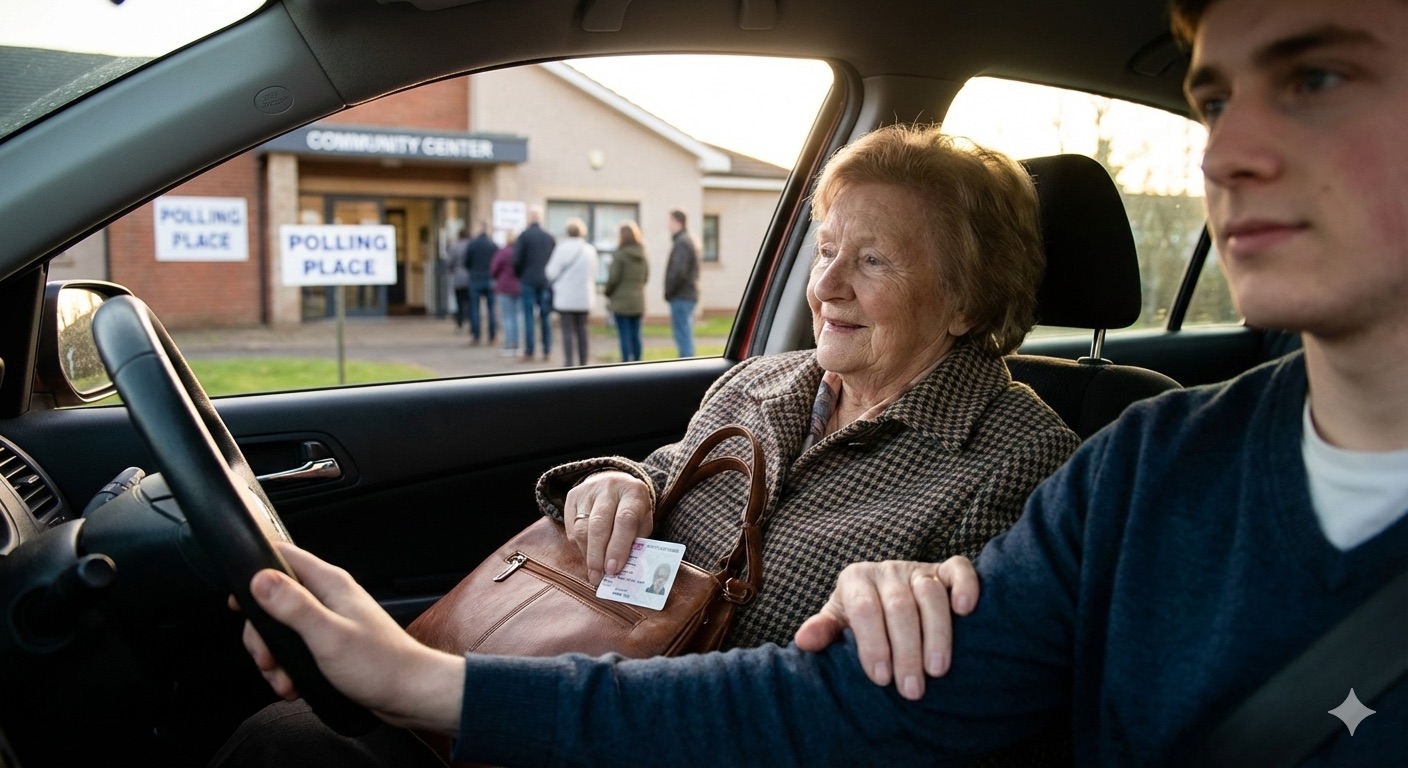
If unsure: "I understand. Is there anything that would make it easier for you to vote? We can help with transportation or answer questions about the ballot."
Step 3: Recruit and train volunteer teams
Start recruiting volunteers at least four weeks before election day. Post on social media asking supporters to sign up for specific shifts. Send emails to your supporter list with a scheduling link. Ask your most active volunteers to recruit their friends personally.
Start volunteer recruitment at least four weeks before election day.
Be specific with asks: "Can you make calls for two hours next Tuesday at 6 pm?" gets a better response than "Can you volunteer sometime?" People commit more often when they know exactly what time and how long.
Train new volunteers one week before mobilization starts. In short, 30-minute sessions cover:
How to use your calling system
How to sound natural on the script
How to handle objections
How to log responses correctly
Include 10 minutes of role-play to boost comfort and confidence.
Step 4: Execute multi-channel outreach campaigns
Use multiple contact methods (texts, calls, and door knocks) to reinforce each message. Layer them strategically in the final two weeks:
Text first: fast and affordable.
Call next: evenings and weekends work best.
Knock last: focus on voters who didn’t respond to earlier contact.
A congressional campaign in Virginia used this sequence: texts to 8,200 supporters, calls to 3,100 who didn’t respond, and door knocks to 890 unreachable by phone. The result: 71% contact rate, nearly double what they achieved in a previous cycle using phone banking alone.
Step 5: Track progress and optimize performance
Monitor three metrics daily during your mobilization period:
Contact rate: percentage of successful conversations.
Commitment rate: percentage of voters who pledge to vote.
Actual turnout: verified after election day.
For example, if 500 calls lead to 150 conversations, your contact rate is 30%. Expect higher rates on weekends or after 5 p.m.
Based on our experience, typical commitment rates by channel are as follows:
Phone calls: 60-70%
Texts: 40-50%
Door knocks: 70-80%
Track results in a shared dashboard so your team sees daily progress and momentum.
How Solidarity Tech helps voter mobilization
Every campaign knows the pain of scattered data. A volunteer calls someone who already got a text that morning. A canvasser knocks on a door where the voter has already voted early. Three different spreadsheets, none of them up to date, and hours of work lost.
Solidarity Tech fixes that. It brings every contact, call, text, email, and door knock into one connected system, so your whole team works from the same real-time information.
At the heart of it is the people database, a single record of every interaction with every voter. A phonebanker can see that Maria received a text yesterday and asked about her polling location. The canvasser visiting Maria’s street can view that same conversation before knocking on her door. No overlap, no missed context.
The predictive dialer helps your team move faster by connecting volunteers only to answered calls. Instead of 15 conversations an hour, volunteers can complete 40-50, maximizing contact rates in the final stretch.
With text blasts, you can reach thousands of voters instantly: schedule reminders when early voting opens, three days before election day, and again that morning. The system automatically skips voters who’ve already cast ballots or opted out, saving time and protecting your list quality.
The team activity dashboard shows everything that’s happening: total calls made, texts sent, doors knocked, and emails delivered. You can compare this week’s contact rate to last week’s and see exactly where to focus your efforts.
Together, these tools eliminate wasted effort, improve coordination, and give your campaign a real-time view of your outreach progress. Your team spends less time updating spreadsheets and more time turning supporters into voters.
Schedule a demo to see how managing all voter contact in one system can help your campaign reach more people with less chaos.
Building long-term organizing power through voter mobilization
Many campaigns stop mobilizing once polls close. Volunteers disappear, data sits unused, and months of effort fade. That’s a missed opportunity.
Every volunteer who made calls or knocked on doors learned skills your campaign can use year-round: leadership, outreach, and coordination. Keeping them engaged turns short-term help into long-term capacity.
Turn GOTV Into Ongoing Organizing
When voter mobilization is treated as relationship-building instead of a one-time turnout push, it becomes the foundation for future campaigns.
Your voter database becomes a supporter database for advocacy and fundraising.
Your phonebank scripts can adapt for petitions or public meetings.
Your texting tools can send alerts about local issues or council votes.
The same infrastructure that mobilized 500 voters in October can mobilize 500 residents for a February town hall.
Identify and Grow New Leaders
Mobilization reveals your most engaged supporters. The 200 who pledged and voted are your reliable base. The 50 who volunteered are your future organizers. The 30 who donated are your champions.
Give emerging leaders real responsibility:
A volunteer who made 200 calls can lead the next phonebank.
A canvasser who brought friends can manage a team.
A student who sent 1,000 texts can run social outreach.
Each step strengthens your leadership pipeline for future elections.
Use Campaign Wins to Build Political Power
Elected officials remember who delivered turnout. If your team’s work helped secure a narrow win, that’s leverage. Meet with officials after the election, share your outreach data, and highlight what issues your voters care about. Turn campaign relationships into ongoing influence.
The Takeaway
Treat October’s phone banks as the start of a relationship, not the end. The people, data, and systems you build during voter mobilization are long-term assets, the backbone of every campaign and advocacy effort that follows.
FAQs on Voter Mobilization
How far in advance should voter mobilization campaigns begin?
Most successful campaigns launch voter mobilization 6-8 weeks before election day. This timeline gives you enough runway to contact your target universe multiple times through different channels. Volunteer recruitment starts earlier, around 10-12 weeks out, so you have time to train people and build your team before the intensive contact period begins.
What voter turnout increase can campaigns expect from mobilization efforts?
Research shows that personal contact through phone banking increases turnout by 2-4 percentage points among contacted voters compared to voters who receive no contact, with targeted follow-up calls nearly tripling the effect in some cases.
Door-to-door canvassing shows slightly higher impact at 3-5 percentage points, with J-PAL research finding 8.7% increases among successfully contacted voters. Combining multiple contact methods yields the highest results, by 7-10 percentage points.
How do voter mobilization efforts work in low-turnout elections?
Off-year and local elections typically see 15-35% turnout compared to 50-65% in presidential years, with 2024 seeing 65.3% turnout. This lower baseline means voter mobilization produces a larger relative impact on the outcome. In a municipal election with 5,000 voters, mobilizing an additional 150 voters represents 3% of the total turnout.
What legal requirements apply to voter mobilization activities?
Voter mobilization qualifies as a legal nonpartisan activity in all 50 states. Organizations can contact voters to encourage turnout without restrictions on express advocacy or campaign coordination. State laws govern access to voter files and what information campaigns can use. Text messaging requires prior consent under federal TCPA regulations.
read more
Explore More Political Campaign Insights
From voter mobilization to digital outreach and field organizing, explore proven strategies and tools to run winning political campaigns.
/hm1hjw3quj75ugzyq5nm7eftxbcc)
Voter Engagement Strategies to Turn Supporters Into Voters
/5bqh6gey9kufh5xsv6uk4nel9u90)
How to Run a Political Campaign and Build Winning Coalitions
/5s4zztybk04opn98yjluwn5kw7gy)
What is the Best CRM For Political Campaigns?
/mmn9nnh94fpfdjk1c15ql0mce7kd)
What is Political P2P Texting? Key Insights for Campaigns
/8mbscn4g2093o25llu2tb118p5cj)
Political Technology Examples and Effective Campaign Tools
/ghmyxdooewpn69a1ll2dm91a64c4)
How to Build Political Campaign Websites That Win Support
/cnfp9zh3b2ox1klabv872uu0qtax)
How to Use Political Outreach for Stronger Campaign Engagement
/hrhy216lnyqrtfdh1n291pwuzug0)
What is Political Phone Banking? How Campaigns Build Power