/gee3thz25shzwdftdep7kdqs7gl9)
/k8yjd63e5983y612hfxk4mglt4zh)
Content
Campaigns that win elections today aren't running phone banks out of church basements with paper call sheets anymore. Virtual phone banking has replaced the physical call center for most campaigns at every level, from local school board races to Senate contests.
Get the fundamentals down, and you'll understand how to build a field program that moves people.
How Virtual Phone Banking Powers Political Campaigns
A virtual phone bank is web-based. Volunteers and staff contact voters from any location using software that connects them to a voter list, displays a script, and logs results in real time. No physical call center required. Volunteers log in from home on a laptop, tablet, or smartphone, work through a call queue, and enter disposition codes after each conversation. Those results sync directly back into the campaign's voter file.
Campaigns use political campaign virtual phone banking for four distinct purposes: voter identification (finding out where voters stand), persuasion (moving undecided voters), get-out-the-vote (GOTV) mobilization, and fundraising outreach. Each one calls for a different script, a different list, and a different timing strategy. The four functions share the same infrastructure, but they're not interchangeable.

Components of Virtual Phone Banking Systems
Every virtual phone bank runs on the same basic pieces: a voter database, a dialing interface, a script display, and a disposition logger.
Voter database: Sourced from state voter registration lists, often cleaned and scored by the campaign's CRM
Dialing interface: Either manual click-to-call, a power dialer, or a predictive dialer
Script display: Shown on-screen next to the contact record, with branching paths for different responses
Disposition logger: Records outcomes (supporter, undecided, hostile, no answer) after every call
Volunteers need only a phone, a browser, and decent internet. That's it, no printed lists, no physical office.
What Are the Advantages of Virtual Phone Banking Over Traditional Phone Banking
Virtual phone banking beats the traditional approach on three fronts: geography, scale, and cost. A campaign in a competitive Ohio district can recruit volunteers from California, New York, or anywhere else with an internet connection. That geographic reach was structurally impossible with a physical call center.
Logistical overhead drops sharply too. You don't need a rented office, folding tables, printed scripts, or a room full of landlines. A campaign can spin up a virtual phone bank in hours and shut it down just as fast. And because volunteers can call from home on their own schedule, you're able to run shifts at 7 AM and 9 PM simultaneously without staffing a physical location.
Types of Virtual Phone Banking: Live, Automated, and Hybrid Approaches
Not every calling program works the same way. Campaigns choose their approach based on the goal, the timing, and the volunteer capacity they have available.
Live Phone Banking and Volunteer Calling
Live calling with trained volunteers is the most effective method. Research from a foundational study found that live volunteer phone calls boost voter turnout by 3.8 percentage points at roughly $26 per vote generated. That's cost-competitive with door-to-door canvassing.
Live calls work because they create real conversation. A volunteer can answer a voter's question about a candidate's position on a local issue. A robocall can't. The difference in trust is measurable.
Automated and Predictive Dialing Systems
Predictive dialers call multiple numbers simultaneously and connect the volunteer only when a live person answers. Campaigns using predictive dialing regularly report three times more conversations per hour compared to manual dialing, because volunteers aren't sitting through rings and voicemails.
But automation has limits. A 2025 study with 7,600 respondents identified a backlash against AI voter outreach and found that American voters are especially skeptical of AI-enabled calling, perceiving it as a norm violation when used deceptively. Fully automated robocalls produce near-zero turnout effects; the trust factor that makes live calls work disappears entirely.
Hybrid Models Combining Multiple Communication Channels
And most serious campaigns combine live calling with P2P texting, email follow-ups, and event outreach. According to the 2024 post-election professional survey from the Center for Campaign Innovation, 46% of campaigns used P2P texting as part of their voter contact mix, behind paid canvassing (58%) and volunteer canvassing (55%). Phone banking sits inside a broader communication ecosystem, not outside it.
Building Your Voter Contact List and Targeting Strategy
Your call list is only as good as your targeting. Dialing through an untargeted voter file wastes volunteer time and tanks contact rates.
Segmenting Voters for Personalized Outreach
Campaigns segment their voter file by party registration, past voting behavior, geography, and modeled scores (persuadability, base support, likelihood to turn out). A GOTV call list looks completely different from a persuasion list. GOTV calls go to confirmed supporters who've got low turnout history; persuasion calls go to likely voters who are genuinely undecided. Mixing them up is one of the most common list management mistakes.
Identifying High-Priority Audiences and Districts
Not every precinct deserves equal calling effort. Campaigns identify high-priority districts by modeling the margin of victory needed, then concentrating volunteer hours where the math says it matters most. A well-built campaign data organization setup makes this segmentation straightforward; a scattered spreadsheet approach makes it nearly impossible.
How Virtual Phone Banking is Powered by Modern Platforms
The platform sitting behind a virtual phone bank determines how much a volunteer can accomplish in a single shift. Most campaigns in 2026 are choosing between a handful of well-known systems or building on top of their existing CRM.
NGP VAN is the dominant voter file and field organizing platform for Democratic campaigns. It manages the underlying voter data, tracks volunteer activity, and syncs with most phone banking tools. Open Virtual Phone Bank (OpenVPB) and CallHub are common front-end calling interfaces that pull data from it, presenting each volunteer with the next contact record, a customized script, and a simple disposition menu. The volunteer sees the voter's name, address, and any previous contact history, all on one screen.
Phone Banking Software Features and Capabilities
A solid phone banking software setup includes three dialer modes: one-to-one calling for sensitive persuasion conversations, a power dialer that moves volunteers quickly between calls, and a predictive dialer for large-scale GOTV pushes. Each serves a different purpose. Using them incorrectly inside the same operation wastes your most capable volunteers on tasks that don't need their skill level.
Script display, real-time disposition logging, volunteer performance reporting, and voicemail drop are standard features at this point. Campaigns running above 1,000 calls per week should also look for call summaries and AI transcription, which cut the per-call administrative burden substantially.
Connecting Voter Databases and CRM Systems
Phone banking software that doesn't talk to your CRM for organizing campaigns creates a data problem fast. Every call disposition needs to flow back into the voter file the same night it happens. If a volunteer marks someone as a strong supporter at 7 PM and a different volunteer calls the same person at 8 PM, you've burned a relationship and wasted two volunteers' time.
Real-Time Data Syncing and Duplicate Contact Prevention
Real-time syncing prevents duplicate contacts. Good platforms lock a record once it's assigned, release it back to the pool if the call isn't completed within a set window, and mark it as completed the moment a disposition is saved. Campaigns that skip this step spend the final week before Election Day cleaning duplicate data instead of making calls.
What Specific Purposes Do Campaigns Accomplish Through Virtual Phone Banking
Virtual political phone banking isn't a single activity. The four purposes each have a distinct conversation goal.
Voter identification is about building a database of where people stand. Volunteers ask a simple scale question ("On a scale of 1 to 5, how likely are you to support our candidate?"), record the score, and move on. Speed matters here; depth doesn't.
Persuasion calls go deeper. These conversations address a voter's specific concerns about the candidate or the issues they care about most. A good persuasion script surfaces two or three concrete policy contrasts, then asks whether the voter has any questions. These calls take longer, and that's fine.
GOTV calls are about logistics, not persuasion. Volunteers confirm the voter's polling location, remind them of ballot deadlines, offer ride assistance if the campaign has capacity, and secure a verbal commitment to vote on a specific day and time. The research is consistent: a verbal commitment increases follow-through.
Fundraising calls round out the four purposes. These go to existing donors or confirmed supporters asking for a specific contribution amount, tied to a specific deadline or match opportunity.
When Virtual Phone Banking Delivers the Highest Impact
Not every moment in a campaign cycle calls for the same calling intensity. Timing your phone bank against the campaign calendar makes a real difference.
Virtual Phone Banking in GOTV and Mobilization Cycles
The final 72 hours before Election Day produce the highest contact-to-turnout conversion. Campaigns should concentrate their heaviest volunteer calling volume in this window, focusing entirely on confirmed supporters with lower historical turnout. A meta-analysis of 240 U.S. field experiments found that GOTV effects reduced 33, 76% in high-salience elections like presidential races compared to low-salience contests, which means the math on GOTV calling in an off-year local race is better than in a presidential cycle.
Scaling Outreach During Peak Campaign Periods
Scaling a distributed virtual phone banking operation requires thinking about volunteer recruitment well before you need the volume. Campaigns that wait until two weeks before Election Day to recruit phone bankers never hit their call targets. Recruit continuously, train in small batches, and build a habit of weekly shifts starting early in the campaign.
Coordinating Virtual Phone Banking with Field and Digital Campaigns
Phone banking works best as part of a contact sequence, not as a standalone channel. A voter who received a mailer yesterday and gets a live call today is more likely to engage than one who gets a cold call with no context. Democratic campaigns reached 70% of battleground voters in 2024, yet engagement still declined, which tells you that volume without a coordinated contact strategy isn't enough.
Setting Up and Managing an Effective Phone Bank Operation
A phone bank that runs itself doesn't exist. It needs structure, trained volunteers, and someone watching the numbers.

Recruiting, Training, and Supporting Phone Bank Volunteers
Volunteer onboarding for political campaigns determines whether someone comes back for a second shift. Most campaigns lose volunteers after the first session because the experience was confusing, isolating, or badly organized. Keep first-shift training to 20 minutes. Pair new callers with experienced ones for the first 30 minutes. Debrief at the end of every shift.
But retaining volunteers across multiple sessions is where campaigns build real calling power. Strong volunteer retention strategies focus on recognition, clear progress updates, and a sense of team. Volunteers who feel like they're part of something stay. Volunteers who feel like a phone-call factory don't.
Distributed Virtual Phone Banking Operations vs. Centralized Call Hubs
Most campaigns in 2026 run distributed operations where volunteers call from home. Some still use centralized call hubs for the final GOTV push, where the energy of a room full of callers helps sustain momentum and supervisors can coach in real time. Both models work; the choice depends on your volunteer base and your technology setup.
Scripts, Messaging, and Handling Voter Objections
Scripts should be short, conversational, and built around the voter's likely concerns rather than the campaign's talking points. A good phone bank script has a brief introduction, one open question, two or three brief message points, and a clear ask. You can generate a solid starting script with a tool like Solidarity Tech's free phonebank script generator and refine it based on what volunteers hear on calls.
Objection handling is the piece most campaigns under-train. Volunteers who can't handle a skeptical voter tend to hang up early and log incorrect dispositions. Train for the three most common objections before every shift.
Compliance, Legal Requirements, and Voter Data Protection
Virtual phone banking operates inside a real regulatory environment. Ignoring that is how campaigns end up with legal problems they didn't see coming.
TCPA and Do Not Call Compliance in Campaign Calling
The Telephone Consumer Protection Act (TCPA) governs political calling in ways that differ depending on whether you're using live-agent calls or automated dialers. Live-agent calls to cell phones are generally permitted for political campaigns without prior express consent, but automated dialers calling cell phones without consent create serious TCPA exposure. The FTC's Do Not Call Registry doesn't apply to political campaigns directly, but state-level laws vary, and some states impose their own restrictions. Know your state's rules before you start dialing.
Protecting Voter Data and Ensuring Privacy Standards
Voter files contain personal information. Campaigns should limit access to the voter database to staff and volunteers who need it for their specific role, use platforms that encrypt data in transit and at rest, and have a clear data retention policy for after the election. Disposition data entered by volunteers counts as campaign data, not public data, and should be treated accordingly.
How Solidarity Tech Powers Virtual Phone Banking for Campaigns
Solidarity Tech was built by organizers for organizers, and that background shows in how the calling tools work in the field. Where generic CRM systems require workarounds to run a phone bank, Solidarity Tech's phone banking software has three dialer modes built in: one-to-one for leadership development calls, a power dialer for member mobilization, and a predictive dialer for large-scale GOTV operations that connects volunteers only to answered calls, producing roughly three times more conversations per hour compared to manual dialing.
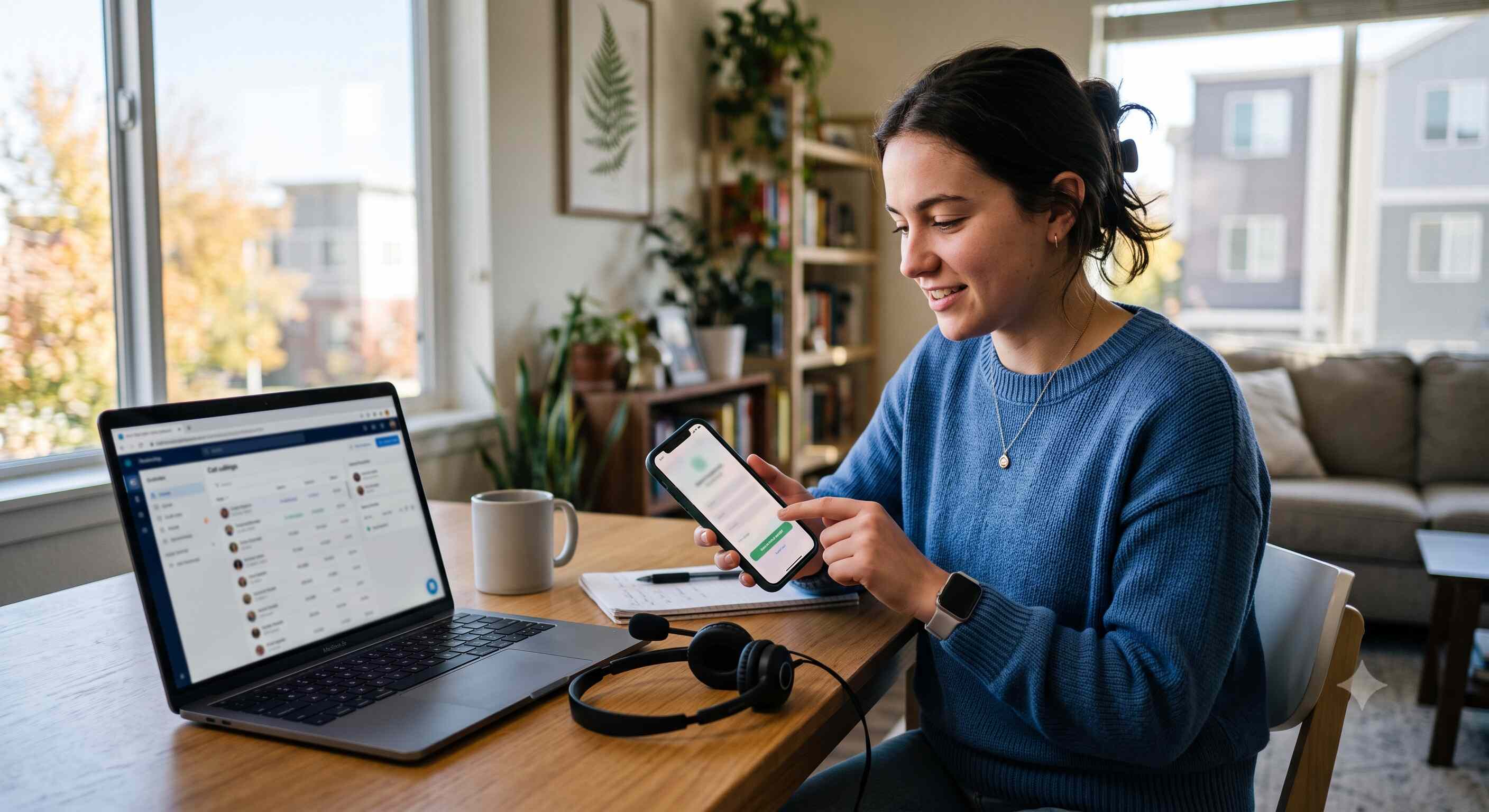
Volunteer access takes seconds. Share a magic link, volunteers complete a simple form, download the mobile app, and they're calling. No IT setup, no seat-based pricing that penalizes you for growing your team. The platform's campaign volunteer management software tracks attendance, logs every call automatically, and feeds disposition data back into the CRM in real time, stopping duplicate contacts before they happen.
The reporting tools let you see contact rates, conversion to commitment, and individual volunteer productivity without exporting anything to a spreadsheet. And if you're running relational organizing tools alongside your phone bank, Solidarity Tech routes incoming calls and texts to the right organizer based on existing relationships, not whoever happens to pick up. That's the difference between a calling operation and an organizing program.
Measuring the Effectiveness of Virtual Phone Banking in Political Campaigns
Measuring a phone bank is about more than counting calls made. Campaigns that only track volume miss the signals that tell them whether the operation is working.
The contact rate (calls reaching a live person) should fall between 15% and 25% per session, according to The Political Group's 2026 benchmarks. Below 15% usually means a list quality problem or a calling-time mismatch. Voter ID rate tracks how many contacts resulted in a recorded supporter score. Volunteer productivity measures conversations per hour, not just calls attempted.
Voter Turnout and Conversion Rates from Phone Contact
The gold standard metric is turnout lift. Live volunteer calls generate roughly 3 to 4 percentage points of lift among contacted voters; robocalls generate near zero. Campaigns running below 2 points of lift should audit script quality, list targeting, and volunteer training before adding more call volume. More calls with a broken script just means more wasted effort.
Combining Virtual Phone Banking with Digital and Canvassing Outreach
Phone banking alone rarely wins a race. It works best as part of a layered contact strategy: a voter who's been reached by mail, a digital ad, a door knock, and a phone call is far more likely to turn out than one reached by any single channel. The Center for Campaign Innovation's 2024 relational organizing field test found that trusted-network contact produced strong results while traditional P2P texting alone produced no measurable turnout effect, which reinforces that the messenger matters as much as the message.
Conclusion
Virtual phone banking is one of the few voter contact methods with consistent, peer-reviewed evidence behind it. Understanding what a virtual phone bank is, how campaigns build their lists, and how to structure a volunteer operation around it separates campaigns that move voters from campaigns that just generate activity. The technology matters. But the training, targeting, and connection with the rest of your field program are what put people in the voting booth.
Read more
Build a Political Phone Bank That Wins Elections
From voter ID calls to Election Day mobilization, explore the complete playbook for political voter contact by phone.
/gt55rppivyit40cxuyog0xq1zy9t)
What is Political Phone Banking? A Campaign Playbook for Real Results
/5kzvfsvbioekux2hrc8h3b4v400g)
How to Write Political Phone Banking Scripts That Work
/yqtbgqjnjyzqbnijdpqgr0et2l18)
How Predictive Dialers Work for Political Phone Banks: The Technology Behind the Calls
/dg2vf533mty6leop88trimh2u115)
TCPA Compliance for Political Phone Banking: Rules, Laws & Best Practices Explained
/cf1id7tygjipb99k8k79r8qfxk0r)
What is Political GOTV Phone Banking? 7 Scripts That Drive Turnout