/w2hycx84vms8i779edhb6ku7697u)
/g07rfmydvbdkt0ki146ourtl6z8u)
Content
Say you've got 10,000 voters on your list, a cause you believe in, and six weeks until Election Day. The real challenge is how you reach all of them in time. For most campaigns, that still comes down to phone banking. It's nothing flashy, but it works.
What is political phone banking? It's just people calling people - live, one-on-one conversations with voters, supporters, or community members aimed at persuading them, getting them to the polls, and building support that outlasts a single election cycle.
This guide covers the whole playbook: how to write a script that doesn't sound canned, what the legal rules require, which tools are worth your money, and the other details that separate campaigns winning on the phones from the ones where volunteers end up stuck, staring at a spreadsheet, unsure what to do next.
What is Political Phone Banking?
At its core, political phone banking is simple: volunteers or staff make live calls to registered voters using prepared scripts and organized call lists. The conversation itself is everything. Real people answer. Real people talk back. That exchange builds something automated messages can't touch.
Voters are more likely to commit when someone asks them directly. Research on volunteer mobilization keeps showing the same pattern: personal contact beats every impersonal channel when you're trying to change what people do.
How Political Phone Banking Works
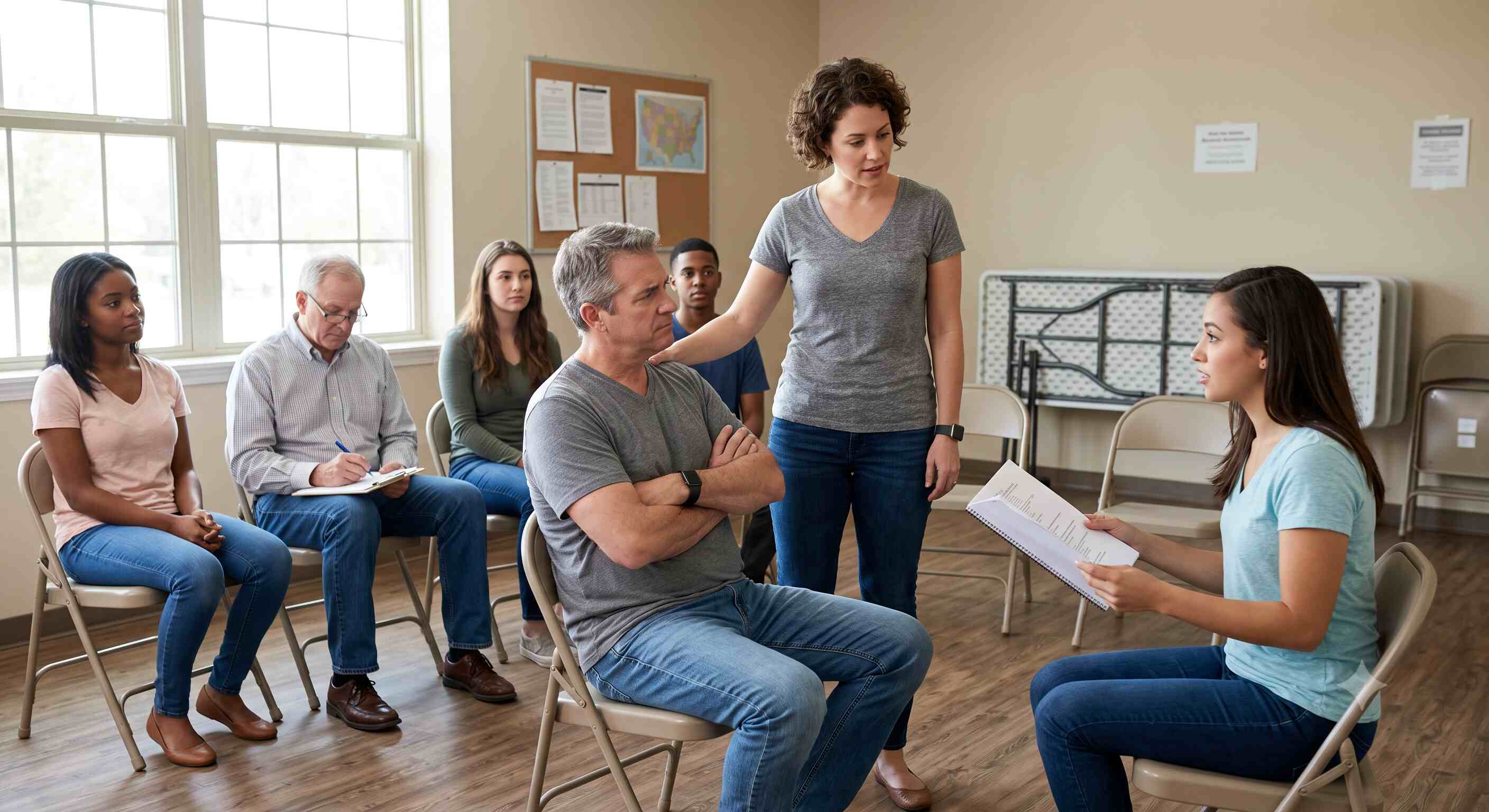
Before the first dial tone, a lot happens behind the scenes. Organizers take a voter file, break it into call lists, load those into dialer software, and train volunteers on scripts. Once calls start, volunteers follow a structured guide while staying flexible enough to hear what voters care about. Each outcome is logged as supportive, undecided, opposed, or didn't answer, and synced into the campaign's CRM.
Good software does the heavy lifting here. Power dialers skip the busy signals. Predictive dialers call multiple numbers at once and connect the volunteer only when someone picks up. Call data flows straight into the database. That beats paper tally sheets by miles.
Phone Banking vs. Robocalls and Other Outreach Methods
Here's where phone banking differs from robocalls. And the difference matters. Robocalls using Automatic Telephone Dialing Systems or prerecorded messages don't move voters; they clutter voters' voicemail. Research from Yale's Institution for Social and Policy Studies found that robocalls are chronically ineffective at mobilizing voters; they land in inboxes but don't land in heads.
Direct mail sits somewhere between. In field experiments run by J-PAL, canvassing raised turnout 8.7 percentage points compared to control groups. Direct mail? Only 0.5 percentage points per piece. Phone banking scales better than face-to-face work because volunteers don't need to leave their homes, but it keeps the personal touch that makes mail look inactive.
Objectives of a Phone Banking Campaign
Phone banking campaigns aren't monolithic. Better campaigns run separate programs for each goal rather than mixing five objectives into one confused script. Knowing what you're trying to do shapes everything else.
Voter Identification (Voter ID)
Voter ID calls ask one straightforward question: what's this voter's position? Callers work through an uncontacted list and score support on a numeric scale (usually 1 to 5; 1 is strong support, 5 is strong opposition). This becomes the blueprint for every other campaign touchpoint.
Persuasion Calling
Persuasion targets undecided voters, the 2s and 3s in your file. The conversation starts with listening, then connects the voter's concerns to your campaign's actual positions. This is the hardest volunteer job because it needs real dialogue.
Mobilization (GOTV)
Get-Out-The-Vote calls target confirmed supporters who haven't voted yet. The 2024 presidential election saw over 158 million ballots cast, but under 50% of 18- 24-year-olds voted. And that's exactly why GOTV phone banking, especially youth GOTV in the final 72 hours, produces some of the highest ROI any campaign can get.

Fundraising Calls
These target previous donors or high-propensity supporters and ask for a specific amount. They need the tightest scripts and the most experienced callers; the ask has to feel both personal and urgent at the same time.
Volunteer Recruitment Calls
People show interest but haven't acted. These calls aim for a concrete commitment: sign up for a shift, attend training, join the phone bank this weekend. Campaigns that understand how to recruit volunteers know that vague "stay in touch" language doesn't work.
Why Phone Banking Still Matters in Modern Campaigns
Ads are cheaper per impression. Texts hit inboxes in seconds. So what's the case for phone banking in 2026? The evidence supports it.
The 64% turnout rate in 2024 was the second highest since 1908. Campaigns aren't mobilizing people from scratch; they're fighting for the marginal voter when turnout's already high. That's where a phone call earns its cost.
The Real Benefits: Personal Connection and Voter Feedback
A live call gives you something no ad touches: instant reaction. When a voter mentions they're worried about housing, that intel flows back into targeting and messaging. You're listening at scale. And Sister District's research synthesis keeps confirming what decades of field experiments show: live contact methods beat impersonal outreach every time.
Personal connection matters for specific groups. Older voters who skip social media. Rural voters with spotty broadband. Voters who delete campaign emails. Phone banking reaches them all.
Overcoming Today's Phone Banking Challenges
Contact rates have dropped as caller ID became standard. But campaigns fight back with branded caller ID (your organization shows up instead of an unknown number), local area codes, and calling at peak answer times (5 to 8 PM on weekdays typically works best). Volunteer fatigue is real too; shifts over three hours see noticeable call quality drops. Short, tight sessions produce better conversations.
Legal and Compliance Requirements for Political Phone Banking
Political phone banking operates under federal and state law. Get this wrong and you're looking at serious liability.
The Telephone Consumer Protection Act (TCPA) restricts calls to cell phones using an Automatic Telephone Dialing System (ATDS) or prerecorded messages without prior express consent. A 2024 FCC Declaratory Ruling made it clear that AI-generated voices on robocalls count as "an artificial or pre-recorded voice" under the TCPA; new tech doesn't dodge the law. That ruling took effect in 2024 and still governs in 2026.
TCPA amendments from March 2024 (effective April 2025) require campaigns to honor opt-out requests "in any reasonable manner"; if a voter says "stop," "quit," or "cancel," you've got 10 business days. If you're not tracking opt-outs in your CRM, you're exposed.
States add their own rules. Some require explicit disclosures about who's funding calls. Others tighten calling hours beyond federal limits. Do-not-call list compliance matters for residential landlines. Before you launch, check your state election law.
Three Approaches to Phone Banking Campaigns
Phone banks don't look the same everywhere. How you structure yours depends on your volunteers, your timeline, and geography. Each model has real trade-offs; your tech choices shift meaningfully between them.
In-Person (Centralized) Phone Banking
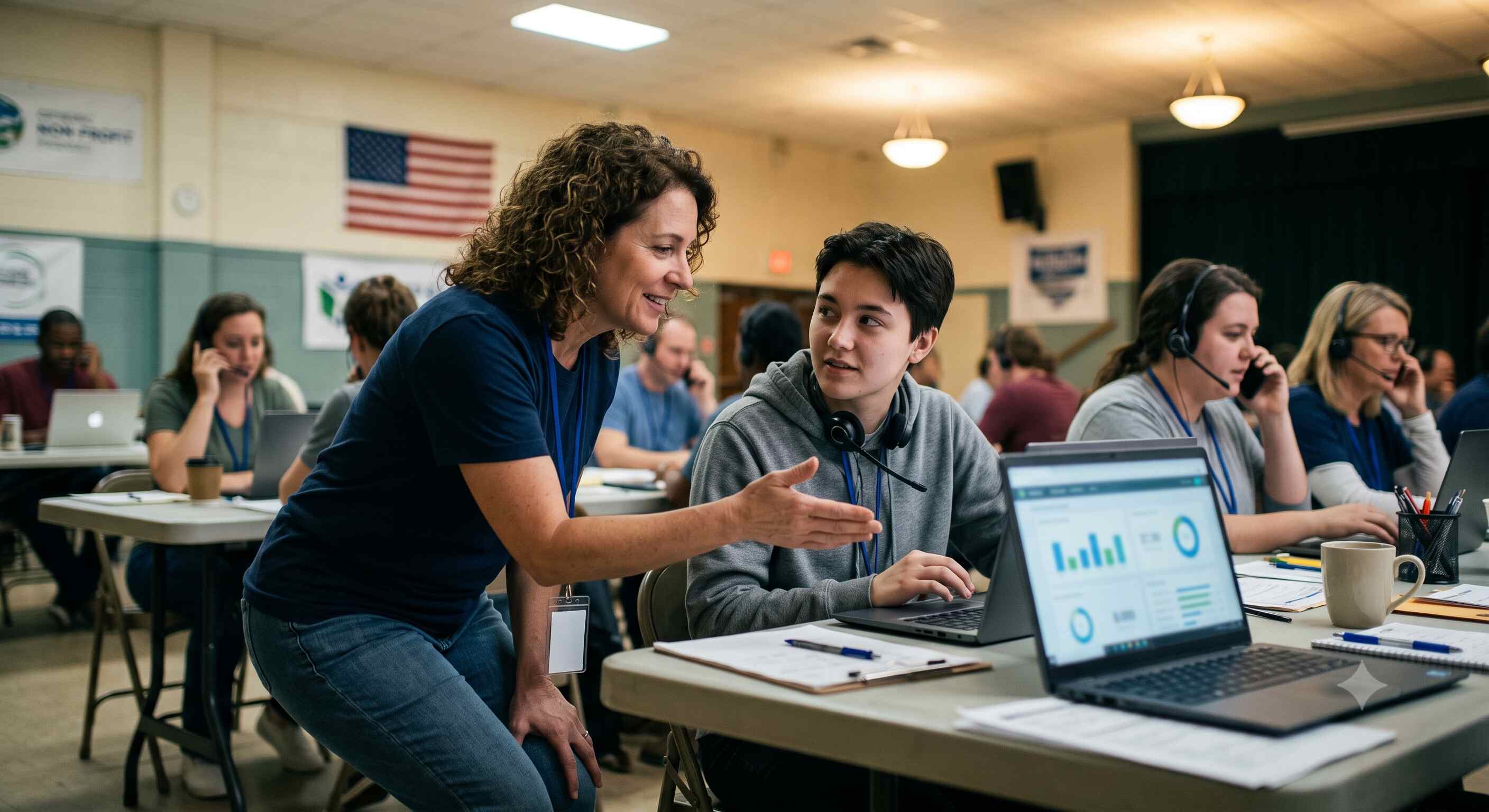
Volunteers gather at an office, union hall, or community center. Staff provides computers, headsets, and supervision. Call quality is highest here; volunteers ask questions in real time, get coached mid-shift, and feel collective momentum. The catch: you're limited to people who can physically show up.
Virtual (Distributed) Phone Banking
Volunteers call from home using a Virtual Phone Bank platform. They access lists, scripts, and logging through a browser or app; no office required. This massively expands your volunteer base (someone across the country can phone bank for you from their couch). VPB tools built into organizing CRMs make this standard now. You lose the in-room energy and face-to-face coaching, so training becomes even more critical.
Hybrid Phone Banking
Some volunteers come in; others dial from home. This works well for dispersed supporters wanting flexibility, if your software unifies call data regardless of location. The coordination overhead is real (you're running two operations), but the contact volume usually justifies it.
Building Your Phone Banking Strategy From the Ground Up
Start with a universe. Your universe is the voter list you'll call, built by layering voter file data with predictive scoring to surface voters most likely to respond. Campaigns that skip this waste volunteer hours on low-propensity people who won't pick up.
Demographics shape this. Youth (18-24) have low baseline turnout but huge potential for lift; seniors answer phones more readily; sporadic voters who showed up once in the last three elections are your GOTV sweet spot.
Step 1: Define Clear Goals and Voter Segments
Pick one objective per session: Voter ID, persuasion, GOTV, fundraising, or recruitment. Build your list to match. GOTV targets confirmed supporters without a ballot. Persuasion targets undecided voters from earlier ID calls. Mixing objectives dilutes both.
Step 2: Prepare Your Call Lists and Scripts
Phone numbers need verification (mobile vs. landline matters for TCPA). Sort by geography and time zone so you're not calling California at 6 AM. Scripts fit one screen; flexible enough to branch based on what a voter says. A good phonebank script generator built on proven methods cuts prep time significantly.
Step 3: Recruit and Train Your Phone Banking Team
Volunteer recruitment works the same as any other ask: direct contact beats mass blast. Campaigns using campaign volunteer management software to track engagement, assign shifts, and send reminders consistently retain more volunteers than those running spreadsheets.
What Makes an Effective Political Phone Banking Script
A script isn't a speech. It's a conversation guide, short enough to leave room for listening, structured enough to keep volunteers from freezing when a voter asks something hard. Four parts show up in every solid script.
The Four Components of a Phone Script
The Hook is your first three seconds. It answers what voters silently ask: "Why should I stay on this call?" Include your name, the organization, and something local and specific about why they should care.
The Purpose is one sentence. "I'm calling so you have a plan to vote Tuesday." Not "I'm calling to tell you everything about our candidate's positions."
The Ask is the specific action. Commit to a voting time. Pledge a donation. Sign up for a shift. Stanford GSB research shows that planning scripts are twice as effective as standard scripts when you walk someone through logistics ("When will you vote? How do you get there?"). They make a real mental commitment.
The Close thanks them, confirms commitments, and ends cleanly. Volunteers who drag calls on after the close hurt their hourly contact rate and undo the goodwill they built.
Adapting Scripts for Different Campaign Objectives
GOTV scripts focus on logistics: time, transportation, location. Persuasion opens with a listening question before pivoting to your message. Fundraising scripts name a dollar amount early. Volunteer recruitment scripts ask for a specific shift on a specific date; vague asks almost never work. Build separate templates for each objective.
Launching and Managing Your Phone Bank
Phone banks run on structure. Without it, volunteers drift, contact rates slide, data quality tanks.
Aim for 15-20 calls per hour with a power dialer; 25-40 with predictive. Contact rates (actual conversations as percentage of dials) typically hit 10-20% depending on list quality and time. Keep shifts to two or three hours; beyond that, call quality visibly drops.
Setting Up Physical or Remote Phone Banking Operations
For in-person: one device per volunteer, stable internet, a shared screen showing real-time stats. For remote: verified phone numbers in the system and platform access from their device. Send login info 24 hours in advance, not 5 minutes before (technical chaos at start time kills 20-30 minutes of work).
Running Effective Phone Banks With Real-Time Coaching
Shift captains should watch call outcomes live. When a volunteer's contact rate tanks or calls drop below 90 seconds, that's a coaching moment. Pull them aside during the shift, listen together, adjust. Campaigns with calling and outreach software showing real-time dashboards catch these issues mid-shift instead of analyzing them the next morning and losing a whole night's worth of quality.
Volunteer Roles and Responsibilities
Not everyone calls. Strong phone banks also need shift captains (managing the room, coaching), data entry leads (handling outcome logging if it's not automated), and tech support for the first 15 minutes. Understanding volunteer roles and responsibilities helps campaigns place people where they'll have the most impact. Volunteers uncomfortable calling contribute in other ways.
Training Phone Banking Volunteers for Campaign Success
A volunteer who freezes when a voter gets loud will hang up, go silent, or say something off-script that becomes a screenshot. Training phone banking volunteers for campaign success is not optional; it's the single biggest lever campaigns underinvest in.
What to Cover in a Phone Bank Kick-Off Session
Every kick-off needs: a script walkthrough (read aloud), a live platform demo, and at least two role-play rounds (one friendly voter, one hostile). Budget 20-30 minutes minimum. Volunteers skipping training produce worse data and burn out faster.
Setting Expectations and Maintaining Volunteer Morale
Tell them upfront: most won't answer. Some of those who do will be rude. That's normal. The goal isn't perfection every time; it's a good conversation when you get one. Setting expectations and maintaining volunteer morale starts with celebrating contact rate and commitment rate out loud. Post running totals on a shared screen. When people see numbers climbing, they keep dialing.
Measuring Volunteer Performance and Ensuring Consistency
For distributed teams, consistency is the puzzle. Measuring volunteer performance and ensuring consistency means tracking calls per hour, contact rate, and commitment rate at the individual level. Volunteers scoring well become future coaches. Those with persistently low contact rates may need a different list (their area code might be screening) or different work. Check your organizing data and reporting tools for volunteer-level breakdowns visible in real time.
Phone Banking Practices
Budget is destiny. At roughly $26 per vote via volunteer calling (Nickerson, American Journal of Political Science, 2006), campaigns need to model cost per contact and cost per commitment before scaling. Predictive dialers cost more per minute but produce way more conversations per volunteer hour; the math usually favors them for GOTV above 5,000 contacts.
Keep Conversations Natural and Voter-Focused
The biggest script mistake is a monologue. Voters check out 15 seconds into uninterrupted talking. Train volunteers to pause, ask, listen before any message. "What issues matter most to you this election?" works better as a second line than candidate biography.
Handle Objections and Difficult Calls
Objections are information. "I don't trust politicians", that's not rejection, that's an opening. Train volunteers on three or four common objections with scripted responses, then let them adapt. For hostile callers, keep it short and polite: "I understand. Thanks for your time." Arguing never converts; it just burns time you could spend on the next dial.
Use Phone Banking Software to Increase Productivity
Manual dialing burns roughly 40% of a volunteer's shift on rings, voicemails, busy signals. A power dialer mode cuts that dead time substantially; predictive dialers cut it further. Campaigns regularly report three times more conversations per hour compared to manual dialing. That's not incremental; it's the difference between 200 contacts and 600 from the same team.
Integrate Phone Banking With Digital Outreach Channels
Calls don't sit alone. An unanswered call gets a follow-up text through P2P texting software. A voter who commits to an event gets an email confirmation through your CRM. Campaigns running multi-channel work (calls, texts, emails) produce higher conversion rates than single-channel campaigns.
Technology Solutions for Large-Scale Phone Banking Operations
A serious phone banking operation has four tech layers. Skip any one, and you hit a bottleneck somewhere.
Voter Files and Targeting Data
Your voter file is the foundation. State parties, the DNC/RNC, vendors like TargetSmart or L2- they all provide voter data with contact info, voting history, propensity scores. Without a current, verified file, your call lists are guesses. Phone number validation before loading into dialers (marking mobile vs. landline vs. VoIP) isn't optional; it's how you stay TCPA-compliant and don't waste volunteer time on bad numbers.
The campaign data organization software you pick needs to validate at import and flag mobiles separately so your compliance team manages consent cleanly.
Virtual Phone Bank (VPB) Platforms
VPB platforms let volunteers call anywhere. Major platforms used by progressive campaigns include those built into organizing CRMs and standalone options. What separates them: predictive dialing support, how they log outcomes, whether call data syncs to your CRM automatically.
Observational research on phone mobilization shows demographic variation in who answers; your VPB needs strong data capture to surface those patterns for future targeting.
Peer-to-Peer (P2P) Texting as a Complement to Calling
P2P texting doesn't replace calling; it follows up. An unanswered call gets a personalized text from the same local number. A voter who commits during a call gets a text confirmation with event details. Platforms combining calling and P2P texting in one system kill the data sync problem haunting campaigns running two separate tools.
How Solidarity Tech Powers Political Phone Banking Campaigns
Solidarity Tech is a political campaign platform built specifically for political phone banking that wins, not the kind that exhausts volunteers staring at spreadsheets. The platform pairs a full organizing CRM with three dialer modes (one-to-one, power, predictive), so campaigns match the tool to the objective instead of forcing every call type through one interface.
The phone banking software includes AI call summaries that automatically capture conversation outcomes, eliminating the post-call logging drag that slows volunteers.
Branded caller ID means supporters see your organization's name, not unknown. Volunteers join via a magic link, download the app, and start calling within minutes; no IT headaches.
For campaigns running the full playbook here (Voter ID through GOTV), Solidarity Tech's advocacy campaign software ties calling, texting, email, and events into one platform. A voter who doesn't answer gets a follow-up text from the same local number, then an event reminder via email, all tracked in a single contact record. Pricing starts at grassroots rates; no per-seat charges, no long-term contracts.
Conclusion
Phone banking works because conversation works. The evidence is solid: volunteer calls produce measurable turnout lift, cost-competitive results, and real-time voter feedback no other channel delivers at scale. What is political phone banking? It's the deliberate combination of smart targeting, trained volunteers, structured scripts, and technology that removes friction.
Use this complete playbook (universe building through post-call analysis), and you're not just making calls. You're building the kind of voter contact program that turns individual conversations into collective wins.
Read more
Build a Political Phone Bank That Wins Elections
From voter ID calls to Election Day mobilization, explore the complete playbook for political voter contact by phone.
/cmlcz08483ittxy0e0qctj84bqfk)
How to Write Political Phone Banking Scripts That Work
/4fs3iqrgliz3kuwl01ohg07sf9gy)
How Predictive Dialers Work for Political Phone Banks: The Technology Behind the Calls
/o7vq52ijf597edu9guj53t72bip3)
TCPA Compliance for Political Phone Banking: Rules, Laws & Best Practices Explained
/cw5euxonrrtk94p3mnyomy5826ud)
What is Political GOTV Phone Banking? 7 Scripts That Drive Turnout
/azyrw13gu0x04winj8hsldf44ibf)
What is a Virtual Phone Bank? How Political Campaigns Reach Voters