/az3oqceyhau8qm3laoyxcokyhblp)
/r0bc67o4xj89h9ywh2a17jxu351l)
Content
Campaigns pour months into recruiting volunteers, assembling voter lists, and gathering donations. Then they watch elections slip away because not enough supporters vote. Political GOTV phone banking tackles this head-on. It's one of the rare voter contact methods backed by decades of randomized field experiment data, and the results are worth paying attention to before you build your next strategy.
What is Political GOTV Phone Banking?
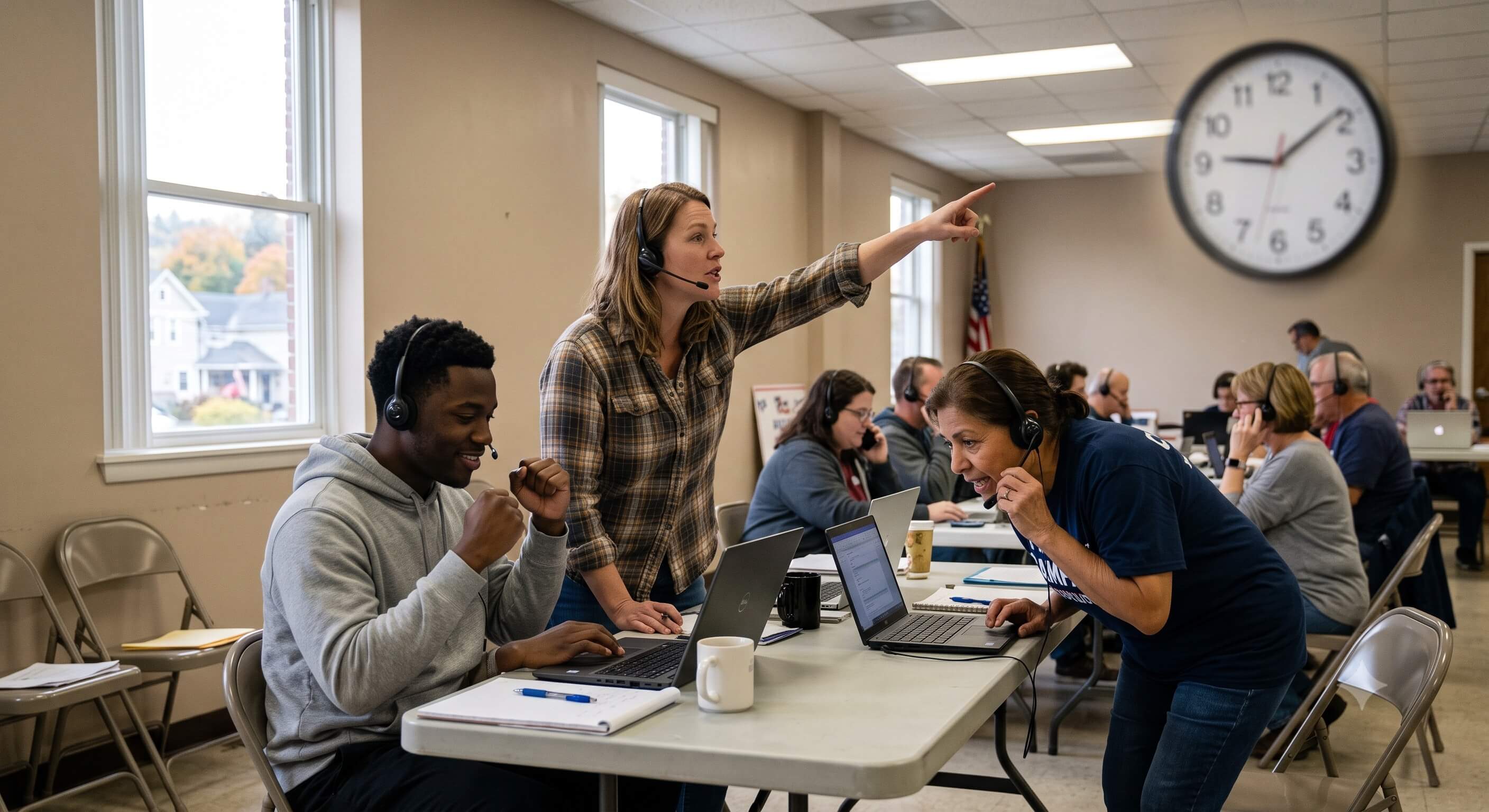
Political GOTV (Get-Out-The-Vote) phone banking is a structured voter mobilization practice where volunteers or campaign staff make live calls to registered voters with one clear goal: turning intended voters into actual voters. This isn't about persuasion. The job is confirming support, removing barriers to voting, and getting a commitment to show up.
In a typical campaign, phone banking handles six functions: confirming voter support, securing pledge-to-vote commitments, sharing polling location and hours, providing early/absentee ballot information, flagging transportation barriers, and collecting real-time data on voter intent. Each one feeds the campaign's ability to figure out who needs a follow-up call and who's already locked in.
Direct personal contact through political phone banking produces measurably different outcomes than email blasts or social ads. Passive outreach asks nothing of the voter. A live call creates a social interaction, and that interaction triggers commitment.
How GOTV Phone Banking Differs from Other Voter Outreach
Persuasion calls target undecided voters and try to shift opinion. GOTV calls target confirmed or likely supporters and aim to shift behavior. That distinction reshapes everything: the script, the list, the timing, what counts as a win.
Robocalls and mail are broadcast methods. They reach plenty of people cheaply but don't produce strong turnout effects on their own. According to hundreds of randomized GOTV field experiments conducted by political scientists, live volunteer calls consistently beat prerecorded messages because personal conversation creates accountability.
Why Phone Banking Remains Powerful in Modern Political Campaigns
The 2024 presidential campaigns dramatically reduced their investments in physical field offices compared to 2008-2016, shifting toward mass media and digital outreach instead. That makes live volunteer phone banking one of the few remaining channels for genuine personal contact at scale.
Phone banking also reaches people who don't respond to social media or email campaigns. Older voters, infrequent voters, and voters with language preferences other than English are often reachable only by phone. For any campaign serious about voter contact for political campaigns, phone banking isn't optional. It's the baseline.
How GOTV Political Phone Banking Works
GOTV phone banking runs through seven operational steps: building the voter universe, training volunteers, loading call lists into your software, executing calls with scripts, logging outcomes in real time, running follow-up contact sequences, and debriefing after each session.
The typical call structure has five elements: opening identification (volunteer name and organization), purpose statement (brief, one sentence), the ask (confirm vote intention or secure a pledge), logistics support (polling location, hours, absentee status), and a close that thanks the voter and confirms the commitment.
Optimal calling windows fall between 5:30 PM and 9:00 PM on weekdays and 10:00 AM to 8:00 PM on weekends. The industry consensus is to avoid calling before 9:00 AM or after 9:00 PM local time. For weak supporters, three contacts across the campaign cycle is reasonable; for undecided voters, two contacts with different scripts is standard.
The Role of Volunteers and Phone Banking Teams
Volunteers are why live GOTV phone banking works. According to Nickerson's canonical 2005 study in the American Political Science Review, volunteer calls produced a 3.8-percentage-point turnout boost at roughly $26 per additional vote generated. Professional phone banks show weak to null effects in most peer-reviewed studies.
The quality difference comes down to conversational tone. Volunteers who genuinely care have unhurried, personal conversations. That's the mechanic. Paid callers reading scripts at volume don't replicate it.
Good campaign volunteer management software keeps volunteers organized, tracks their call outcomes, and surfaces who needs coaching before a session wraps.
Targeting Voters and Building GOTV Call Lists
Your call list shouldn't include everyone on the voter file. GOTV calls work best on supporters already identified as leaning your way. The goal is mobilization, not persuasion; you're calling people who need a reminder and a commitment moment, not a pitch.
Most campaigns pull their GOTV universe from a voter file filtered by support score, geography, and past voting behavior. Voter campaign data organization software that validates phone numbers and flags mobile vs. landline contacts before you dial saves enormous time during the actual calling sessions.
Voter Segmentation and Universe Building
Propensity scoring is the backbone of smart list construction. A meta-analysis of 122 GOTV experiments by LSE Associate Professor Florian Foos found that GOTV contact works best with voters who have a 40-60% likelihood of voting (middle-propensity voters who are genuinely moveable).
Calling high-propensity voters (those above 75%) wastes volunteers' time. They're already voting. Calling very low-propensity voters rarely makes enough of a change to justify the spend. The sweet spot is that middle band.
Proven Political GOTV Phone Banking Scripts That Increase Turnout
Effective GOTV scripts share seven characteristics: they open with clear identification, state purpose in one sentence, ask for a specific commitment (not general support), address logistics, handle common objections, close with affirmation, and include a pledge ask when possible. All seven scripts below focus exclusively on turnout behavior. None attempt persuasion or opinion change. The script's tone shifts between early-cycle relationship-building and Election Day urgency.
Script #1: GOTV Commitment Confirmation for Supporters
Use this 3-4 weeks before Election Day to confirm support and secure an initial pledge.
"Hi, is this [Name]? Great, my name is [Volunteer], and I'm calling on behalf of [Campaign]. We're reaching out to supporters like you to make sure everyone has a plan to vote on [Date]. Can I count on you to vote?"
If they say yes: "That's great. Do you know your polling location? I can look it up for you right now."
Log the outcome and flag confirmed voters for a reminder call closer to Election Day.
Script #2: Reminder Calls for Confirmed Supporters
A 2009 study in the Journal of Politics found that targeted follow-up calls to committed voters can produce results almost tripling their effect on voter turnout compared to single-contact campaigns. This script activates that commitment-consistency effect.
"Hi [Name], this is [Volunteer] from [Campaign]. We spoke a couple weeks ago, and you mentioned you were planning to vote on [Date], just calling to remind you that day is coming up. Do you still have your polling location?"
Short. Personal. References the prior commitment directly.
Script #3: Question-Based Scripts to Confirm Voting Readiness
Questions work better than statements in mobilization calls because they require a verbal response, which deepens commitment.
"Hi [Name], I'm [Volunteer] with [Campaign]. Quick question: have you already figured out when you're heading to the polls on [Date]? [Pause.] And do you know your polling location is at [Address]?"
Two questions, one brief pause each. The voter talks more than the caller does. That's the goal.
Script #4: Voting Motivation Reinforcement Script
Research published in NIH PubMed Central confirmed that pledging to vote had a significant impact on turnout among first-time voters. This script is built around that pledge mechanism.
"Hi [Name], this is [Volunteer]. The [Race] election is [Days] away, and every vote really does count in races like this one. Will you make a commitment right now to vote on [Date]?"
Pause after the ask. Let them answer. Don't fill the silence.
Script #5: Early Vote and Absentee Ballot Scripts
Early voting and absentee programs need their own script track because the logistics differ and the urgency framing is different.
"Hi [Name], this is [Volunteer] with [Campaign]. Did you know you can vote early in [County] starting [Date] at [Location]? We want to make sure you don't have to wait in line on Election Day. Can I help you make a plan to vote early?"
For confirmed mail voters: "Your ballot should arrive by [Date]. Have you received it? Do you know how to return it?"
Script #6: Election Day Urgency Script
Election Day scripts have one job: get the voter out of the house today. Keep them under 60 seconds.
"Hi [Name], today is Election Day! Polls are open until [Time] at [Your Polling Location]. We're calling every supporter to make sure nobody misses their chance to vote. Can you head to the polls today?"
If they say they already voted: "Thank you so much, you made a difference today."
Script #7: GOTV Follow-Up and No-Response Voter Script
Voters who didn't answer previous calls still belong in the universe. Leave a voicemail that prompts a response without requiring a callback.
"Hi [Name], this is [Volunteer] with [Campaign]. Election Day is [Date], we just want to make sure you have everything you need to vote. Your polling location is [Address], and polls are open from [Time] to [Time]. We're counting on you!"
Keep it under 30 seconds. State the logistics. Express social expectation without pressure.
Adapting GOTV Scripts Across Electoral Contexts
Scripts that work in a presidential race don't automatically work in a school board election. Voter motivation, name recognition, and salience all shift the conversation, and smart campaigns build script variations for each context rather than recycling one template.
Scripts for Presidential vs. Local and Down-Ballot Races
Presidential elections carry built-in stakes. Voters already know why the race matters. Your script can go straight to logistics: "Do you have a plan to vote?" works because the motivation is already there.
Local races and ballot measures need one extra sentence of context. "We're calling about the water district referendum on your ballot; this one affects [specific outcome] in your neighborhood." That sentence isn't persuasion; it's orientation. Voters can't commit to turning out for a race they don't remember is on the ballot.
Down-ballot script conversion rates run lower. In competitive local races, realistic expectations are 20-30% confirmed commitments per contact. Presidential cycle contact generates 35-50% in strong supporter universes.
Customizing Scripts by Demographic Group and Region
First-time voters respond strongly to pledge-based scripts (see Script #4). Youth voters respond to peer-framing; "everyone in your neighborhood is voting" lands differently than "civic duty" appeals for this segment.
Voters who received messages from people they personally knew were 8.6 percentage points more likely to vote than those in a control group, according to a 2024 Center for Campaign Innovation field test. Relational worker-to-worker organizing tools that route calls to volunteers who share geography or workplace with the target voter are built on exactly this finding.
Multilingual script tracks are non-negotiable in diverse precincts. A Spanish-language GOTV script isn't a translation project; it's a separate voice, tone, and relationship-building approach. Multilingual organizing tools that auto-route contacts to language-matched volunteers remove a recurring operational bottleneck here.
Building a GOTV Phone Banking Strategy for Your Campaign
The operational blueprint for GOTV phone banking follows four phases, each with distinct goals. Timing adjustments based on campaign phase matter more than most campaigns acknowledge: starting too late compresses the follow-up window, and starting too early means you're contacting voters before their vote intention is firm.
Volunteers should be capped at 2-3 hours per session and 20-25 dials. Beyond that, call quality drops and volunteer burnout accelerates. Phone banking paired with text banking follow-ups and canvassing in the same voter universe is the current practitioner standard for multi-channel contact.
Phase 1: Planning and Volunteer Recruitment
Set your voter universe size, calculate the contact rate you need, and work backward to volunteer hours required. At real-world contact rates around 10-12% of dialed numbers (per a 2023 Electoral Studies meta-analysis), a universe of 10,000 voters needs roughly 83,000-100,000 dials to contact everyone. That math drives your volunteer recruitment target.
Recruit volunteers through advocacy campaign software that connects sign-up forms directly to your CRM, so every new volunteer is automatically assigned to a calling session.
Phase 2: Training and Preparation
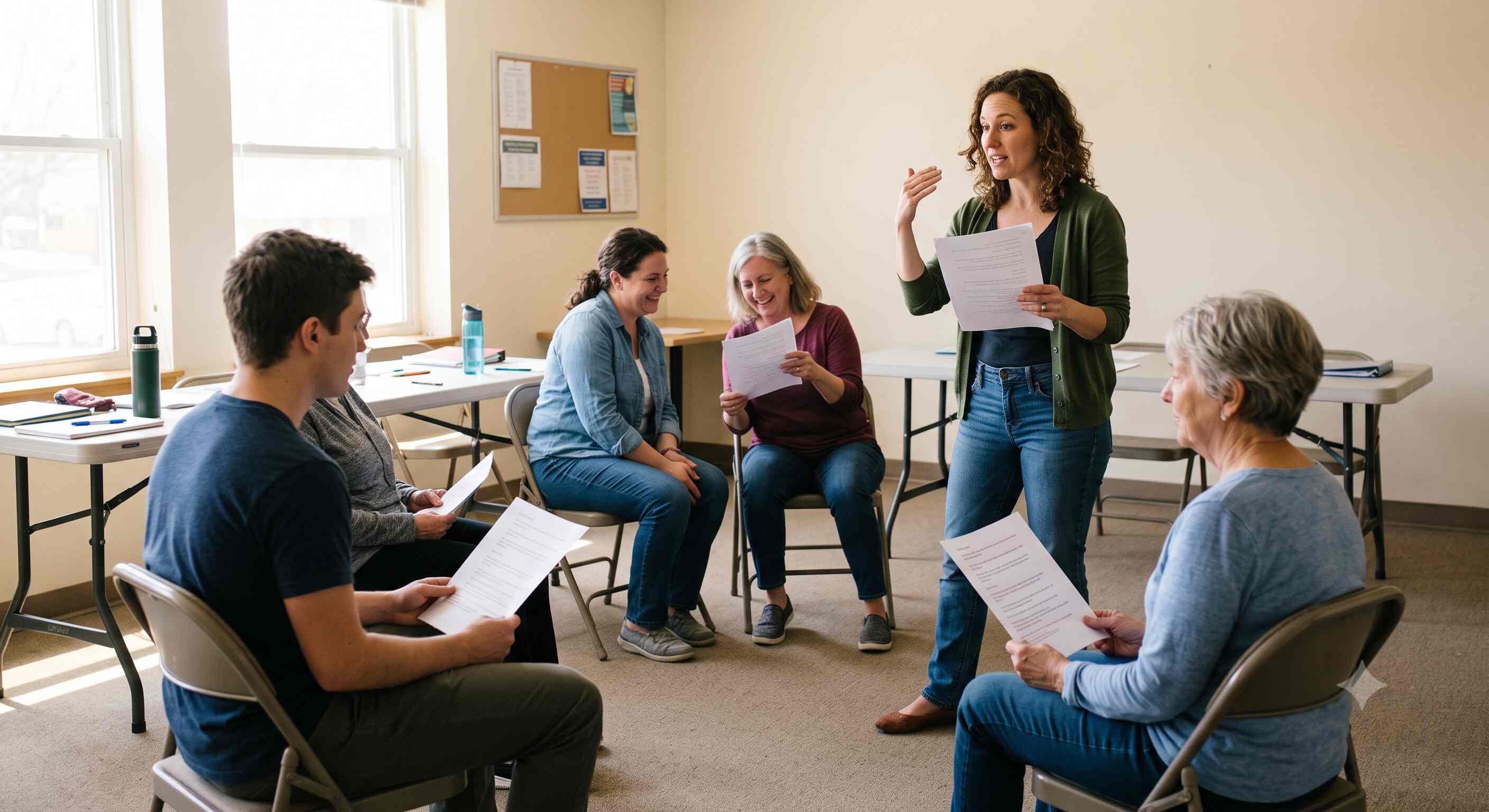
Training runs 20-30 minutes max. Cover the script, the call logging system, how to handle three common objections (hostile voter, already voted, wrong number), and how to leave a voicemail. Role-play one complete call before anyone touches a phone.
Good leadership development software surfaces which volunteers are ready to run their own calling sessions, turning phone bankers into team leads across the campaign cycle.
Phase 3: Execution and Data Collection
Log every outcome: contact made, voicemail left, wrong number, no answer, refusal, confirmed voter, needs follow-up. Those six outcome codes feed your next call list and your precinct-level turnout model.
Use a predictive dialer for urgent calling during high-volume sessions. Campaigns using predictive dialers regularly report 3x more conversations per hour compared to manual dialing.
Phase 4: Analysis and Results
After each session, review contact rate, average call duration, and pledge rate. Short average call duration (under 60 seconds) usually means volunteers are rushing, a coaching issue. Low pledge rate on a high-support list usually means the script ask is buried. Both are fixable before the next session.
Organizing data and reporting tools that surface per-volunteer metrics let team leads identify who needs support before the problem compounds across a hundred shifts.
Volunteer Training Methodologies for High-Quality Caller Performance
Training methodology directly determines whether your phone bank produces real conversations or mechanical script-reading. The most effective approach: model a good call, practice it, then debrief on what felt authentic vs. scripted.
Proven training elements include listening exercises (volunteers practice pausing and not filling silence), objection simulation (three common pushbacks, live responses), and a brief orientation to the voter's context ("this person has voted in two of the last five elections; they're persuadable with the right motivation framing"). Technical training on call logging should take no more than five minutes.
Volunteer retention rate is a real campaign performance indicator. Campaigns that brief volunteers on why their calls matter, not just what to say, see higher return rates to subsequent sessions. Per-session call limits (20-25 dials max) protect volunteers from the burnout that kills retention. A mobile field organizer app that lets volunteers phone bank from their phones removes the friction of needing to show up to a physical location, which alone improves session return rates.
Political Research on GOTV Phone Banking Effectiveness
Decades of field experiments give campaigns a clear picture of what works and at what cost. The research base here is more developed than in almost any other area of political science, thanks to Yale ISPS and hundreds of registered field trials.
Voter Turnout Gains from Phone Banking Campaigns
Volunteer phone banking's 3.8-percentage-point turnout boost, reported in Nickerson's 2005 study, remains the foundational benchmark. Follow-up research in the Journal of Politics confirmed the commitment-reminder architecture (two contacts to the same voter, with the second referencing the first commitment) can nearly triple that effect.
Per the Yale Institution for Social and Policy Studies, mobilization experiments also show stronger effects in low and mid-salience elections (turnout around 60%) than in high-salience presidential races (above 75%). This means primaries, runoffs, and local contests are where your phone banking resources stretch farthest.
What Makes GOTV Phone Banking Outperform Other Methods
Three factors consistently separate effective phone banking from ineffective phone banking: personal tone, appropriate list targeting, and a clear commitment ask. Professional commercial phone banks fail on the first factor. Poorly built lists fail on the second. Scripts that don't ask for a specific commitment fail on the third.
Research from Ballotpedia's GOTV overview notes that phone banking has been in active use since 1968, when Wally Clinton developed the modern political phone bank for Robert Kennedy's presidential campaign. The technology has changed; the underlying social mechanic hasn't.
Metrics and Indicators for Measuring Campaign Performance
Seven metrics define phone banking performance:
Metric | What It Measures | Benchmark |
Contact rate | % of dials reaching a live voter | 10-12% |
Call completion rate | % of contacts completing the full script | 60-70% |
Pledge rate | % of contacts who commit to vote | 35-50% (strong supporter list) |
Refusal rate | % of contacts who hang up or refuse | Under 15% |
Support ID rate | % of contacts with updated support score | 80%+ of completions |
Cost per contact | Total program cost/contacts made | Varies; ~$26/vote via volunteers |
Volunteer retention rate | % returning for a second session | 50%+ is a healthy program |
Political GOTV Phone Banking vs. Text Banking, Canvassing, and Robocalls
Each outreach channel has a different cost structure, reach profile, and effect size. No single channel wins on every dimension. Smart campaigns use phone banking as the personal-contact anchor and layer in texts and email as follow-up volume tools.
Channel | Cost per Contact | Turnout Effect | Personal? |
Volunteer phone bank | ~$26/vote | +3-4 pp | High |
Canvassing | ~$20-29/vote | +2-4 pp | Highest |
P2P text banking | Low | Varies | Medium |
Robocall | Very low | Near zero | None |
Relational contact | Low | +8.6 pp lift | Highest |
Personal Touch: Why Human Calls Win Elections
A real person calling creates social obligation. The voter knows someone is on the line who cares whether they show up. That accountability mechanism doesn't exist in any automated channel.
And here's the thing: volume has limits. A skilled volunteer might complete 10-15 quality conversations in a two-hour session. Canvassing might produce 5-10 door contacts in the same window. Both matter; neither scales infinitely. That's why P2P texting software plays the follow-up role well; it doesn't replace the personal call but extends the contact sequence affordably.
Legal and Compliance Considerations in Political GOTV Phone Banking
The Telephone Consumer Protection Act (TCPA) governs campaign calls. For mobile numbers, campaigns using auto-dialers need prior express consent unless the call is a manual, live-operator call. Many GOTV operations use manual or power dialer modes specifically to stay within TCPA safe harbor.
Do-Not-Call list compliance applies differently to political campaigns than to commercial callers; political calls are generally exempt from the national DNC registry. State-level restrictions vary. Always check your state's rules before dialing. And never call before 9 AM or after 9 PM local time; that's both legal standard and basic courtesy.
Tools and Technology for Political GOTV Phone Banking
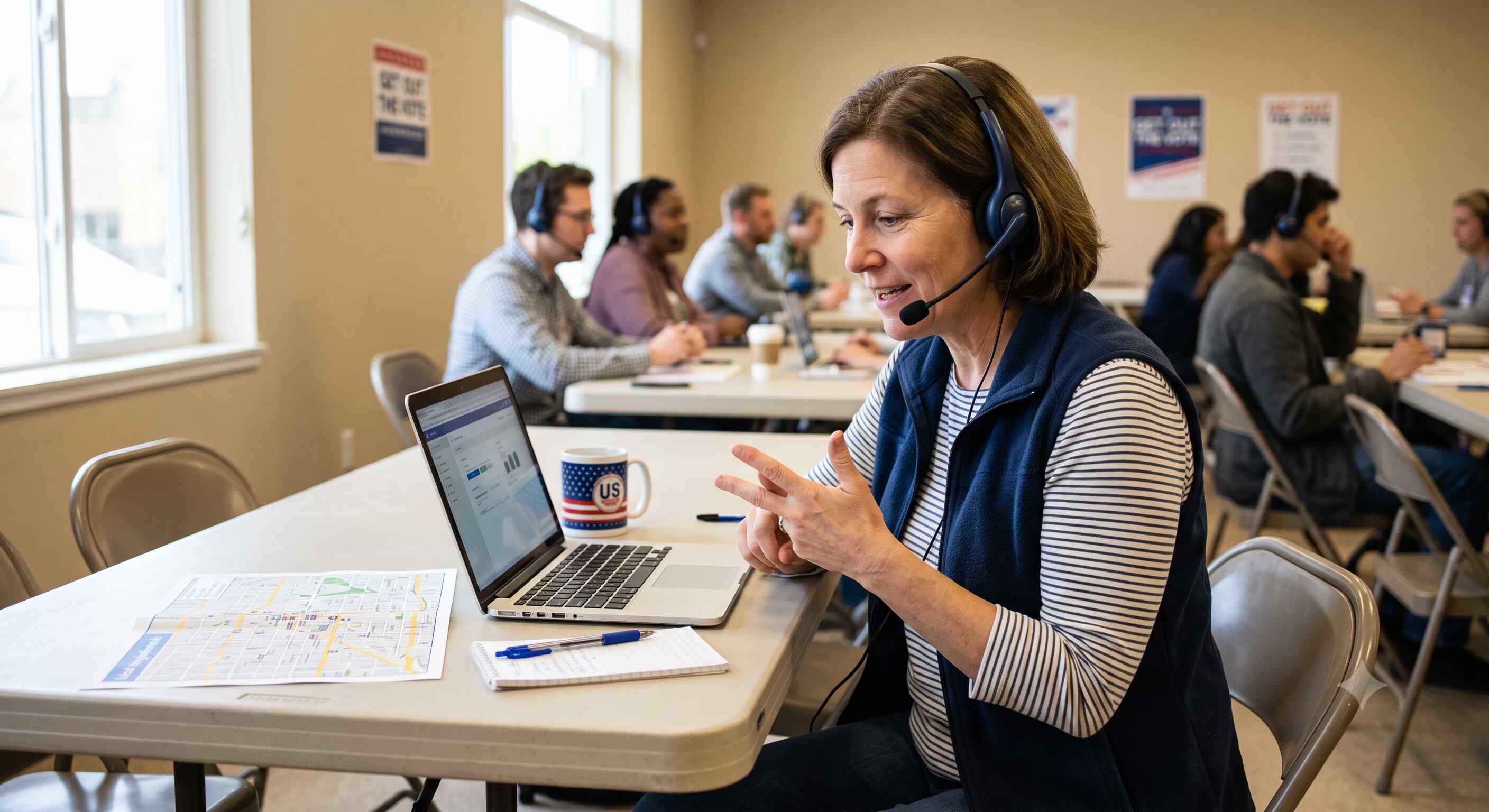
Specialized phone banking platform software serves five purposes: auto-loading call lists, displaying scripts on screen, logging outcomes with one click, routing calls through a shared organizational number, and producing real-time session reports.
ThruTalk and comparable platforms let campaigns run distributed phone banks where volunteers dial from any location using a browser or app. That capability drove a major expansion in remote phone banking after the 2020 election cycle, when in-person volunteer gatherings weren't possible. Remote capacity has stayed high; many campaigns now run 100% virtual phone banks as a matter of preference, not necessity.
Two trends are reshaping modern operations: predictive dialing (which intelligently dials multiple numbers per volunteer and connects only on answer, producing 3x conversation volume) and AI-assisted targeting (using propensity models with a Matthews correlation coefficient of 0.39 accuracy in predicting individual vote behavior based on 2004-2018 voter data, per a 2021 arXiv study). Predictive modeling helps campaigns tighten their voter universe before a single call goes out.
Voter Database and Call List Management
Your call list is only as good as your data. Phone number validation, distinguishing mobile from landline from VoIP, before loading a list saves volunteers from burning 40% of their dials on dead numbers. Good CRM for organizing campaigns handles this automatically at import, flagging bad numbers before they ever reach a calling queue.
List freshness matters too. Voter files degrade quickly near Election Day as absentees are returned and early votes are logged. Pulling an updated list within 24-48 hours of each calling session keeps your volunteer time pointed at voters who still need contact.
Call Tracking and Volunteer Accountability Systems
Every call outcome should log to the voter's record automatically. No manual data entry during a session. Automatic logging via calling and outreach software means organizers can monitor session performance in real time, catch script problems early, and coach volunteers between calls.
Accountability works the other direction too. Volunteers who see their own stats (calls made, contacts reached, pledges secured) stay more engaged across a multi-hour session than those flying blind.
Emerging Trends Shaping GOTV Phone Banking
Relational organizing is the biggest structural shift. Routing calls through people who share a workplace, neighborhood, or community with the target voter produces effects no generic phone bank can match. The 2024 Center for Campaign Innovation field test confirmed the trusted-sender premium at 8.6 percentage points over control.
And AI-assisted call summaries now log conversation outcomes without requiring volunteers to type notes between dials. Branded caller ID, showing the campaign name rather than an unknown number, meaningfully improves answer rates. Multilingual auto-routing means language-matched calls happen without manual coordination.
How Solidarity Tech Supports Political GOTV Phone Banking
Solidarity Tech was built by organizers who ran actual campaigns and found every existing tool fell short on one axis or another. The platform brings calling, texting, email, and CRM into a single system designed for political and labor organizing (not adapted from generic sales software).
For GOTV phone banking, the phone banking software offers three dialer modes: one-to-one for deep relationship calls, power dialer for moving through a large supporter list, and predictive dialer for high-volume Election Day contact. Volunteers join with a single magic link, make calls from their phones, and log outcomes without switching to a separate screen. No technical training required beyond a 20-minute session orientation.
The query builder for campaigns lets you build middle-propensity voter lists quickly, filtering by support score, geography, prior contact history, and language preference. Pair that with the campaign volunteer management software, and you have a system that moves volunteers from sign-up through session assignment to outcome logging in one workflow. Pricing scales with contact list size, not seat count, so you can put 200 volunteers on a calling session without paying per user.
Conclusion
Political GOTV phone banking is one of the most evidence-backed voter contact methods in political science; volunteer-driven calls produce turnout lifts that passive channels simply don't match, especially when campaigns use a two-contact commitment architecture, target middle-propensity voters, and keep call quality high over volume. The seven scripts in this guide cover every stage of the GOTV cycle, from initial commitment confirmation through Election Day urgency. Build your list carefully, train your volunteers honestly, and use software that keeps your data current and your team accountable. That's what turns a phone bank into votes.
Read more
Build a Political Phone Bank That Wins Elections
From voter ID calls to Election Day mobilization, explore the complete playbook for political voter contact by phone.
/sfsq5g14mohn4jfq5ewykxcpsrti)
What is Political Phone Banking? A Campaign Playbook for Real Results
/u6c4zdybwq00xwclkt0g7p11lnuj)
How to Write Political Phone Banking Scripts That Work
/2mm3gczx89sepdfsysggtxp6tig3)
How Predictive Dialers Work for Political Phone Banks: The Technology Behind the Calls
/zh4f5v9wy2rbgpy1yzl1mr3xxs40)
TCPA Compliance for Political Phone Banking: Rules, Laws & Best Practices Explained
/8ijfydm3rrkevzl70r7di1x2ps6f)
What is a Virtual Phone Bank? How Political Campaigns Reach Voters